
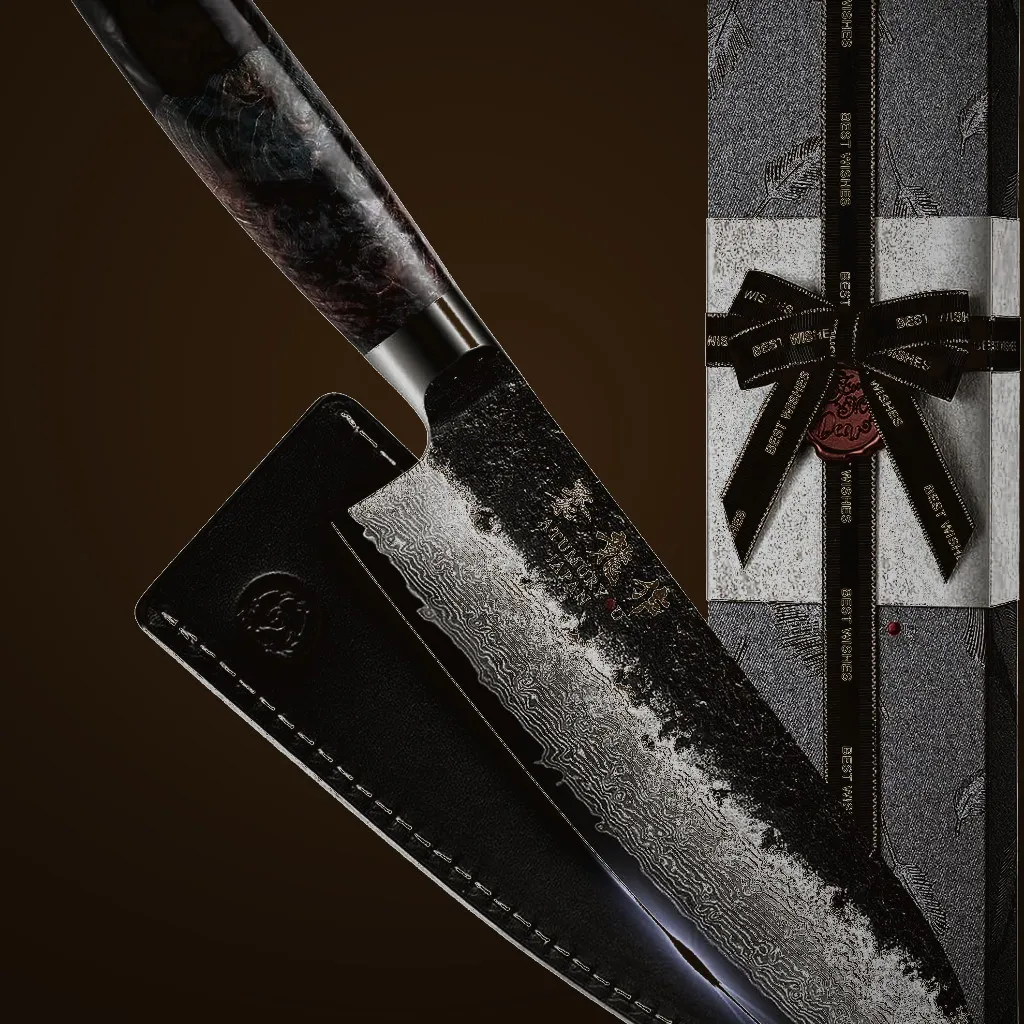
Damascus · Named Core · Pattern-Welded Cladding · Canada
Pattern-welded Damascus with a named core
thirty-nine pieces · $24.16 CAD – $1,524.12 CAD · Tracked shipping · 18+
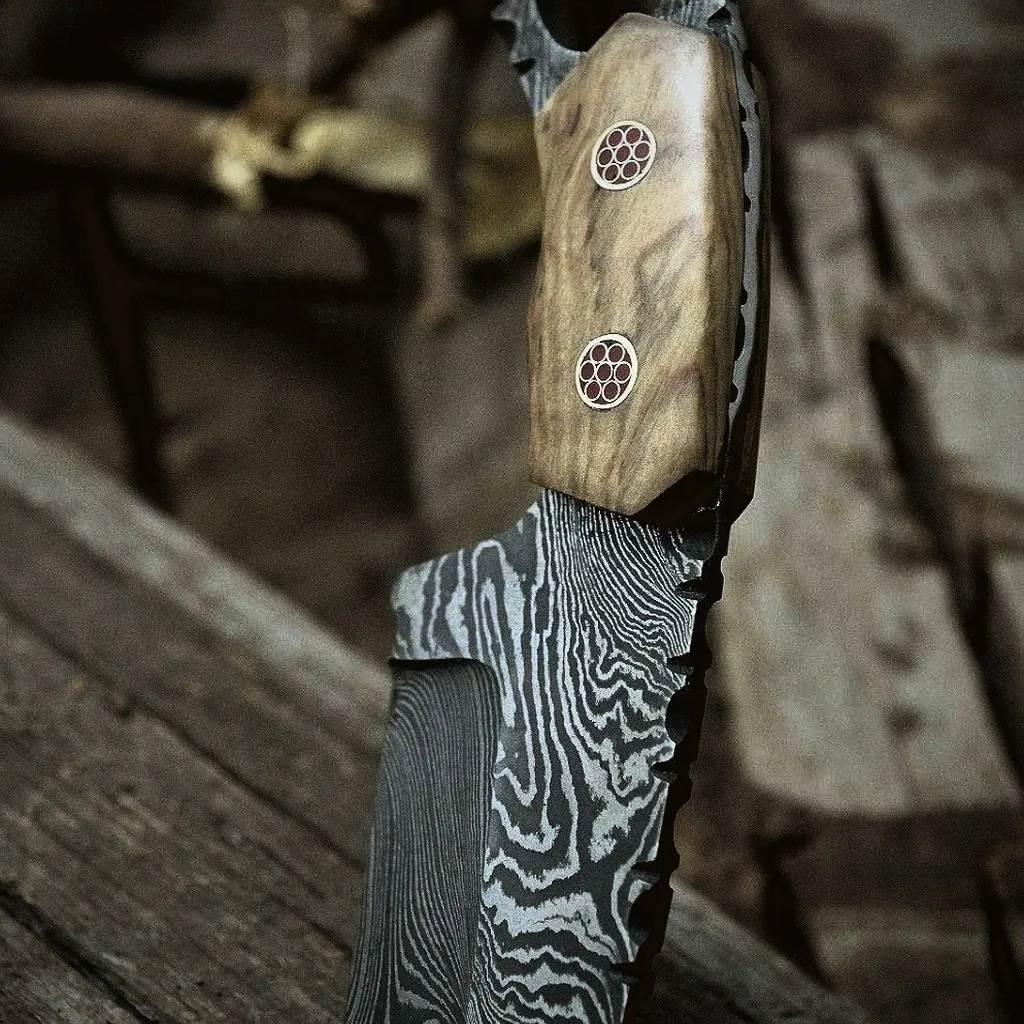
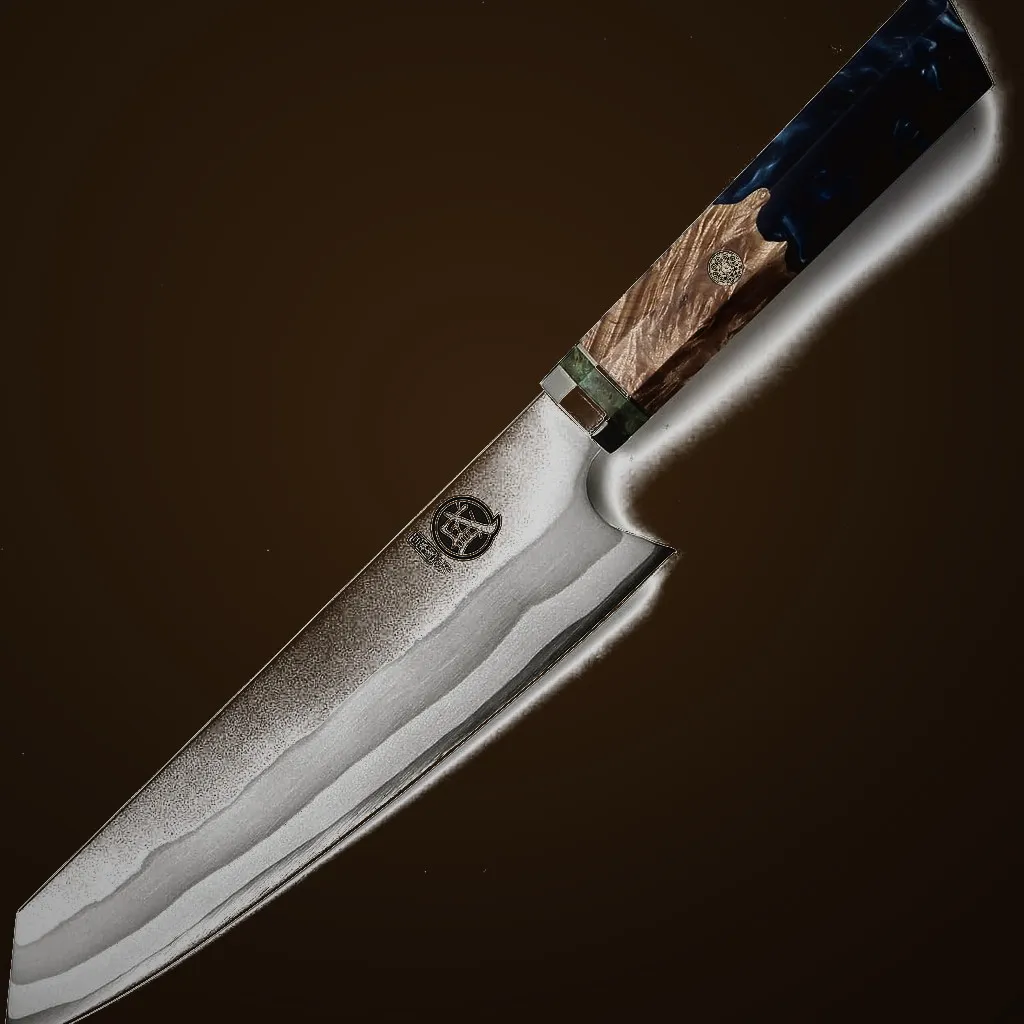
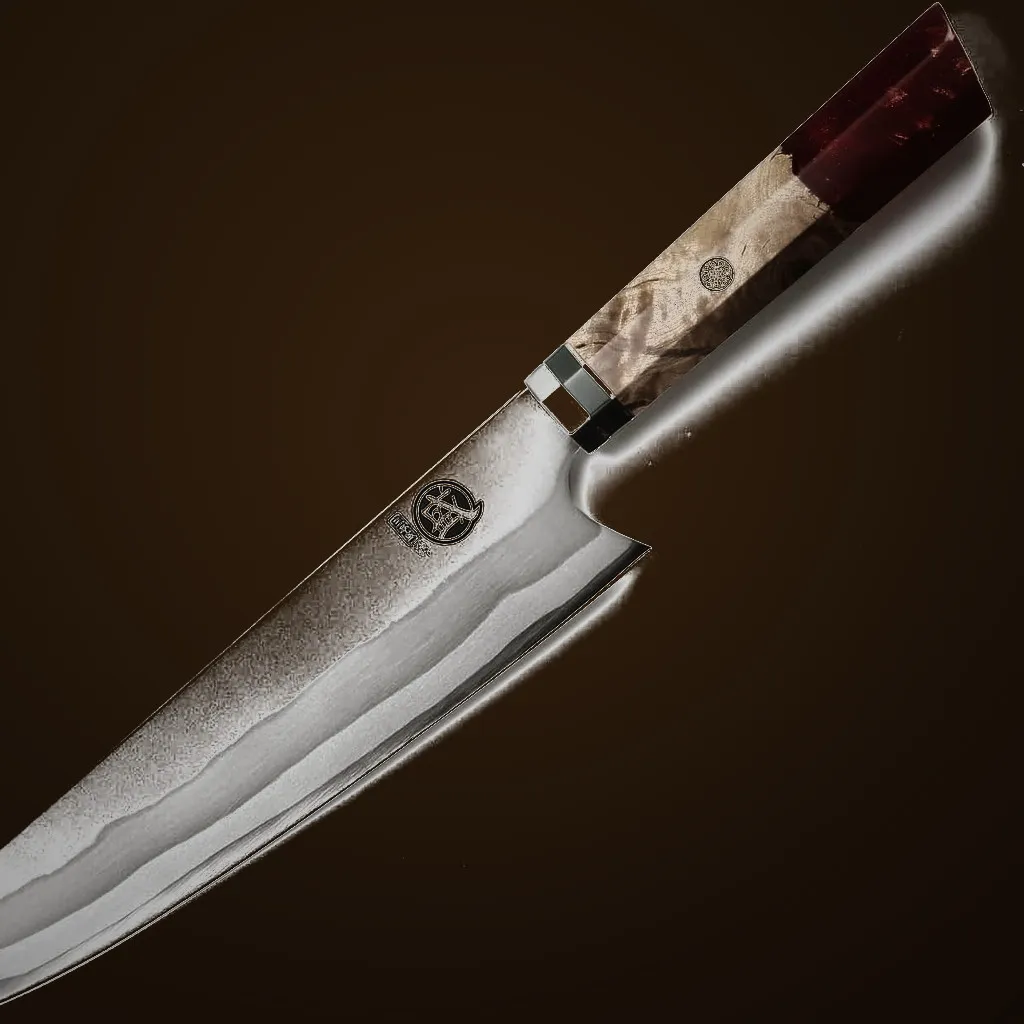
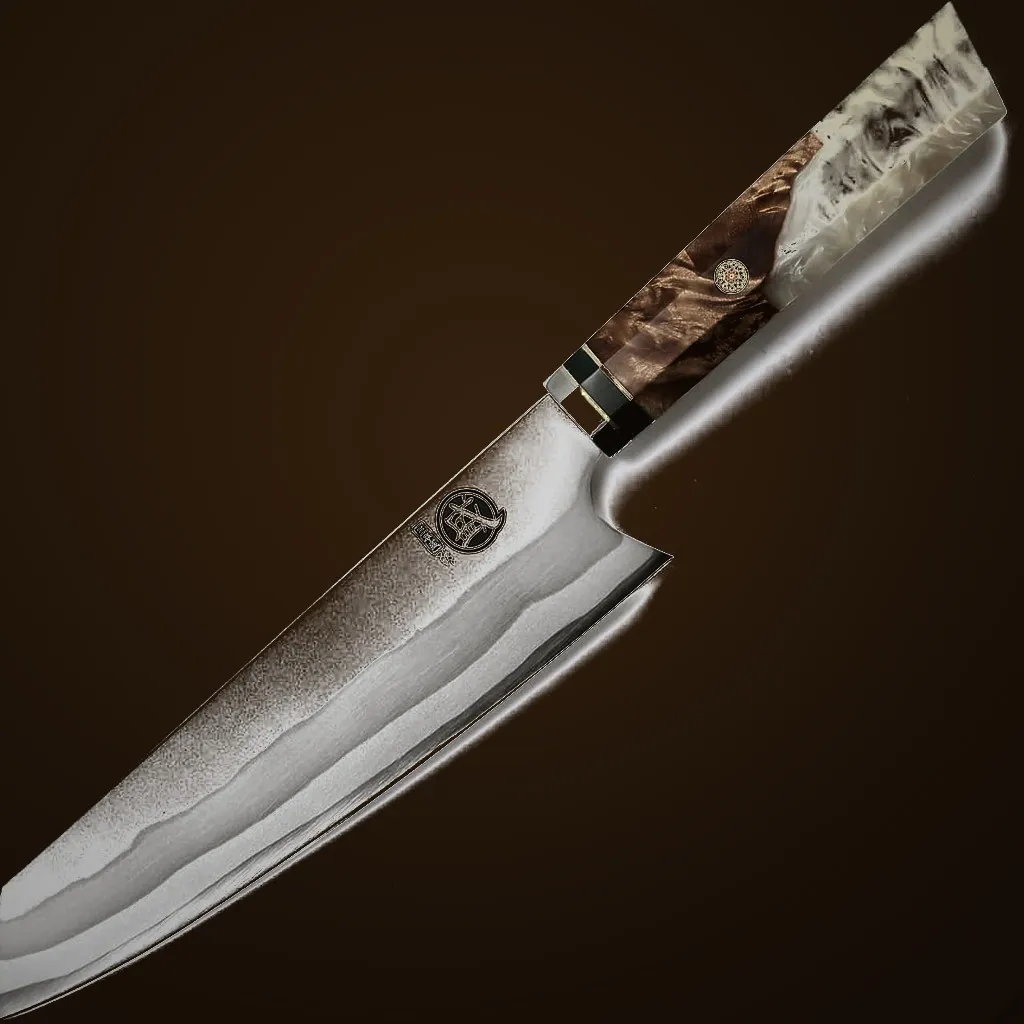
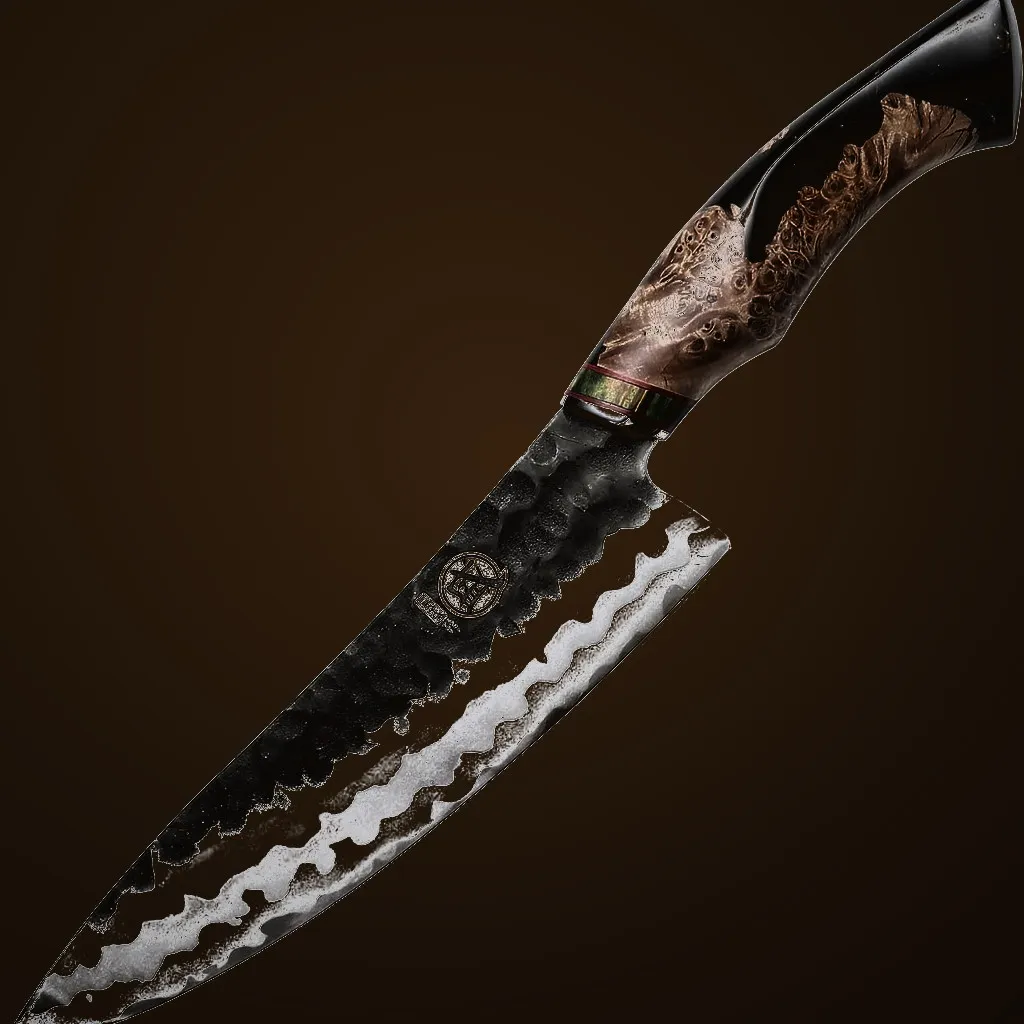
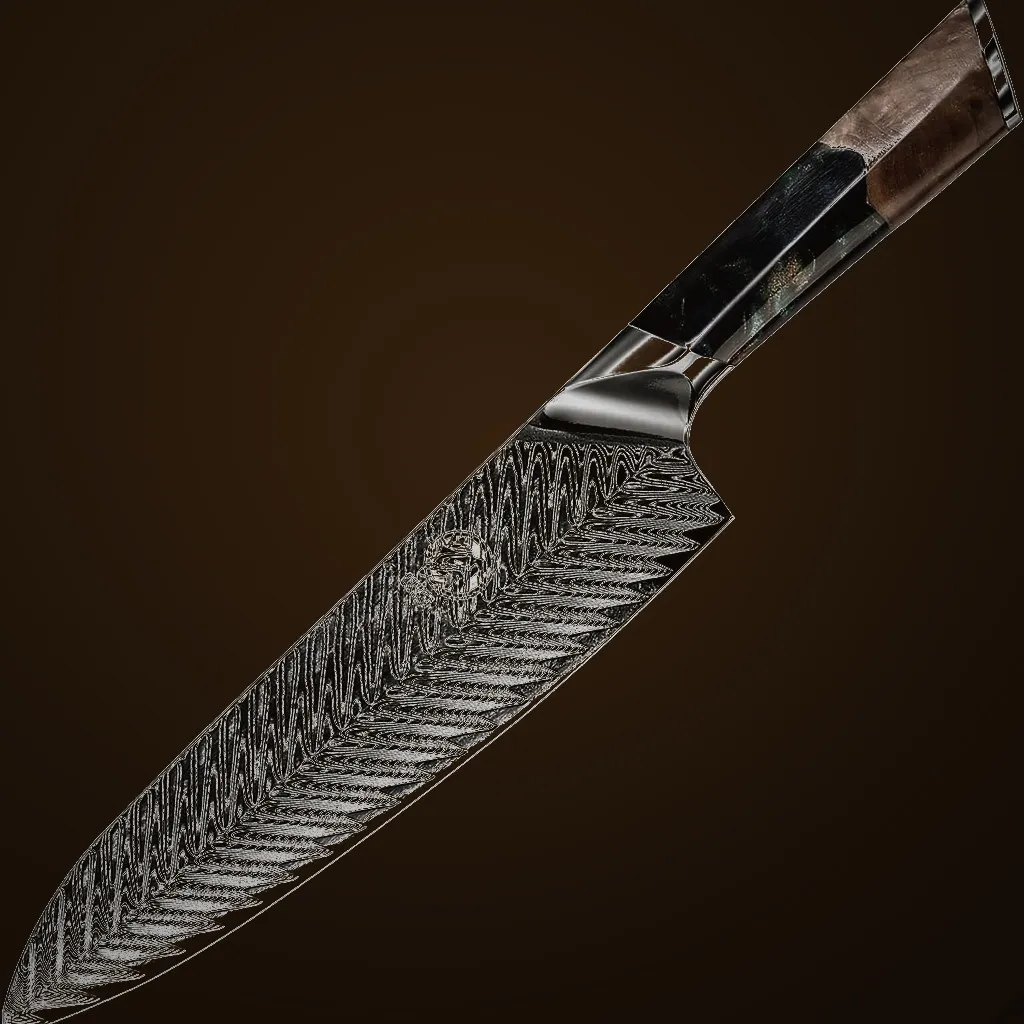
Damascus on this Canadian kitchen rail is a named core under pattern-welded cladding. The waves you see are the sandwich; the thin hard steel in the middle is what meets the onion. That is the whole buying test. Kitchen pieces — gyuto, santoku, kiritsuke, bunka, paring, and matched sets — sit here because Canadian search for “Damascus knives” is mostly a board knife with a visible pattern, bought as an upgrade or a gift. Folders with a Damascus face and a lock you can name sit on the same shelf; they are pocket steel, not a second chef. “67 layers” and “73 layers” are cladding counts, not hardness, and they do not make a knife cut better than a plain VG-10 of the same geometry.
This hub is not the chef-knives page and not the kitchen drawer. Chef knives is the primary-blade job — rocking eight-inch, santoku, bunka, kiritsuke — whether the face is patterned or not. Kitchen is every board and table shape we stock, including steak and paring that never wore a Damascus etch. This page is the patterned construction: cladding you can see, core you can name, CAD on the tag. If a listing will not name VG-10, 10Cr15CoMoV, AUS-10, 440C, ZDP-189, or powder steel, treat “Damascus” as a face until the product page says otherwise.
The Knife Vault is a Canadian storefront, not a Canadian forge and not a US kitchen site with a currency toggle. Prices are CAD from documented source cost plus a professional retail margin, so a Toronto, Calgary, or Halifax checkout is not a USD cart with brokerage at the door. GST/HST is calculated at checkout from your province. Knives and small goods ship tracked at 10% of that merchandise, free when those items total $150 CAD or more, typically two to four weeks in plain discreet packaging — no knife graphics on the box. Adults 18+. Kitchen Damascus is a cooking tool; you confirm lawful ownership at checkout. We do not sell knives as weapons. The metallurgy in writing is the Damascus steel dossier.
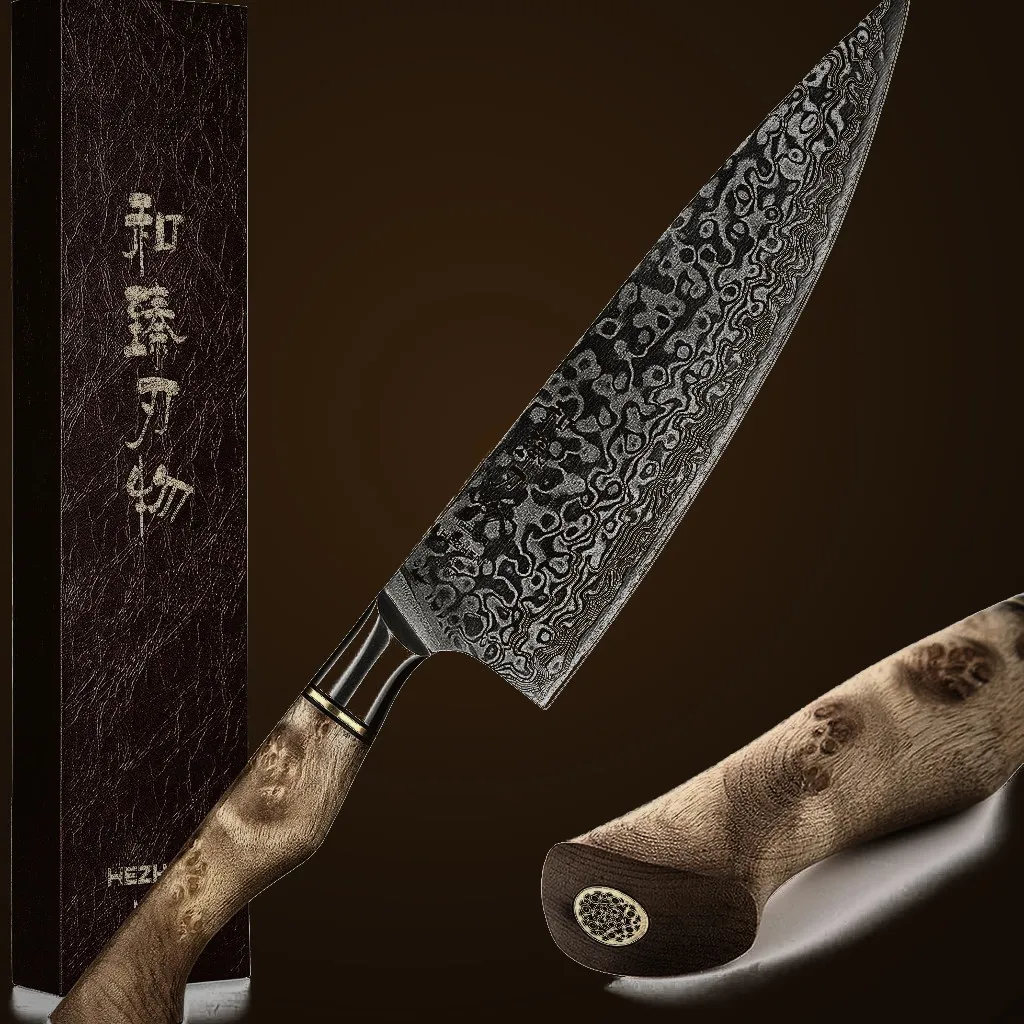
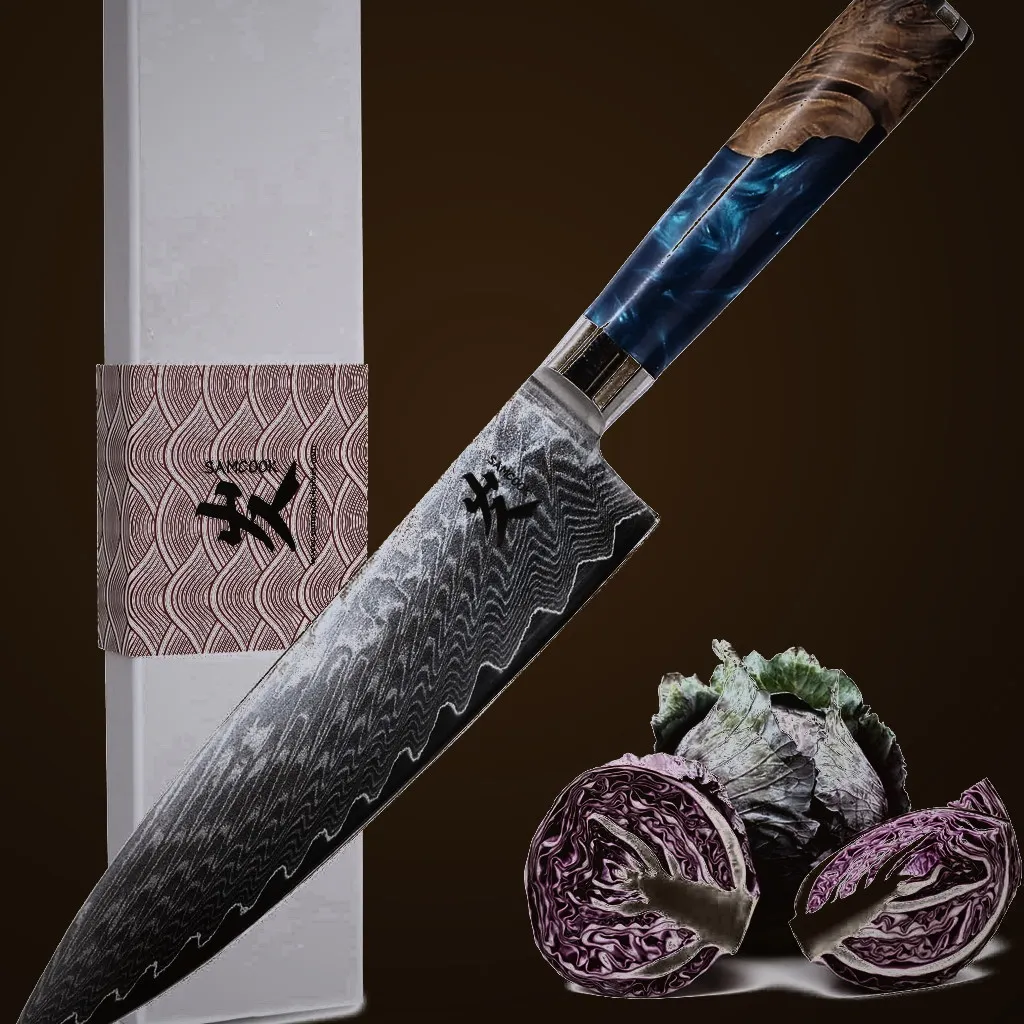
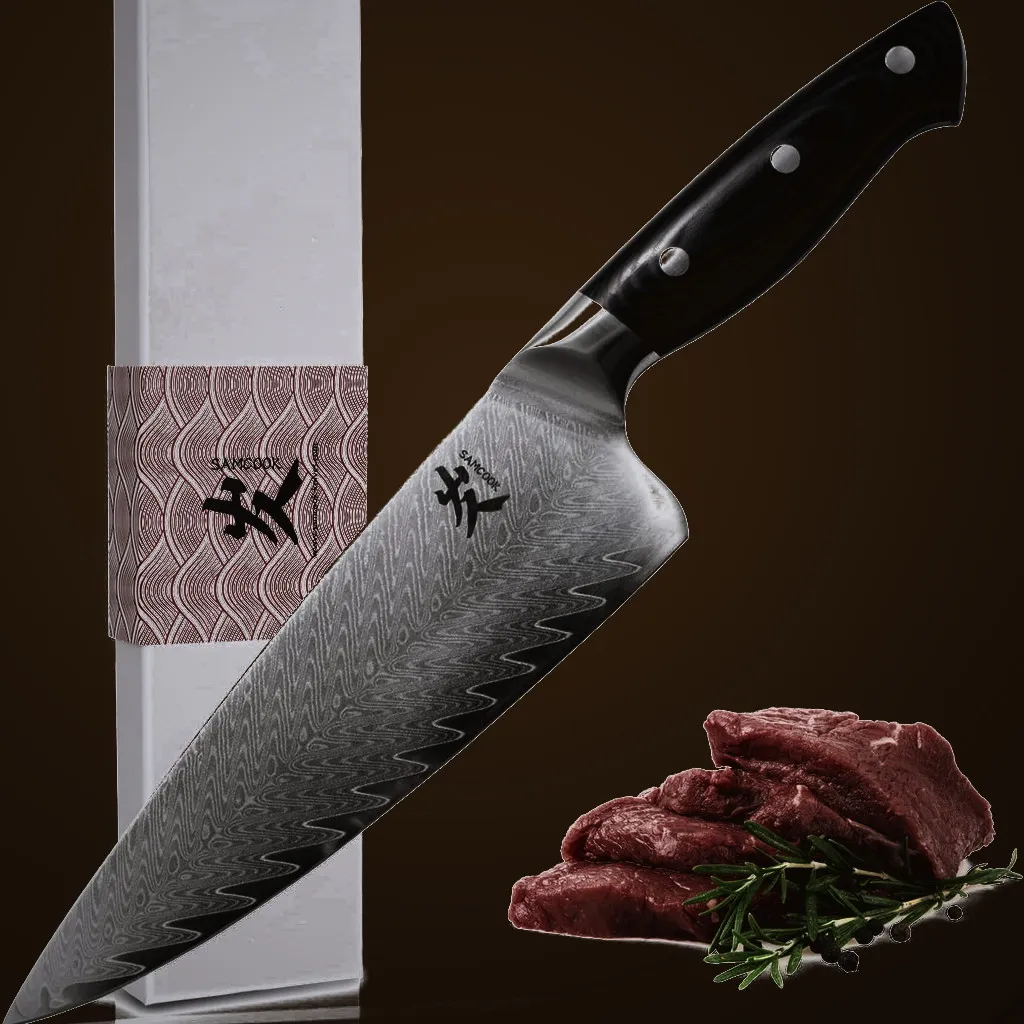
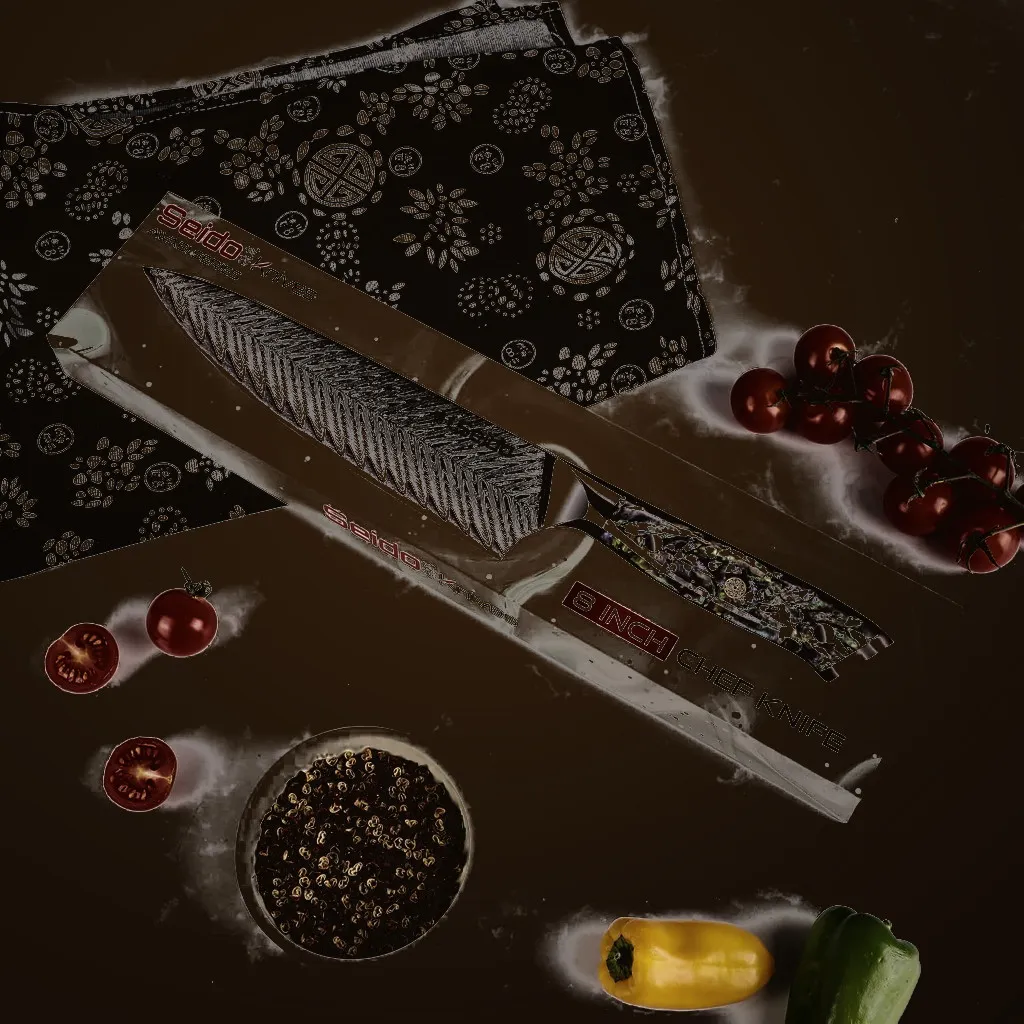
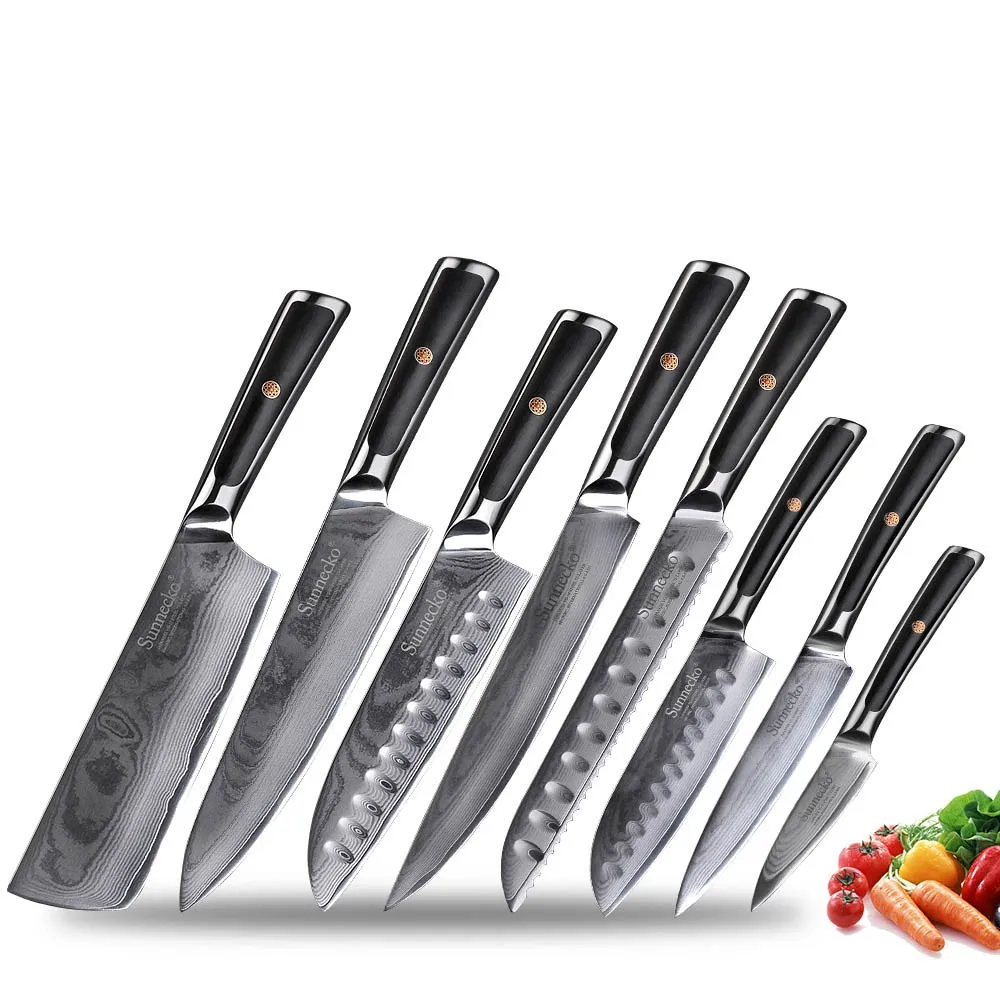
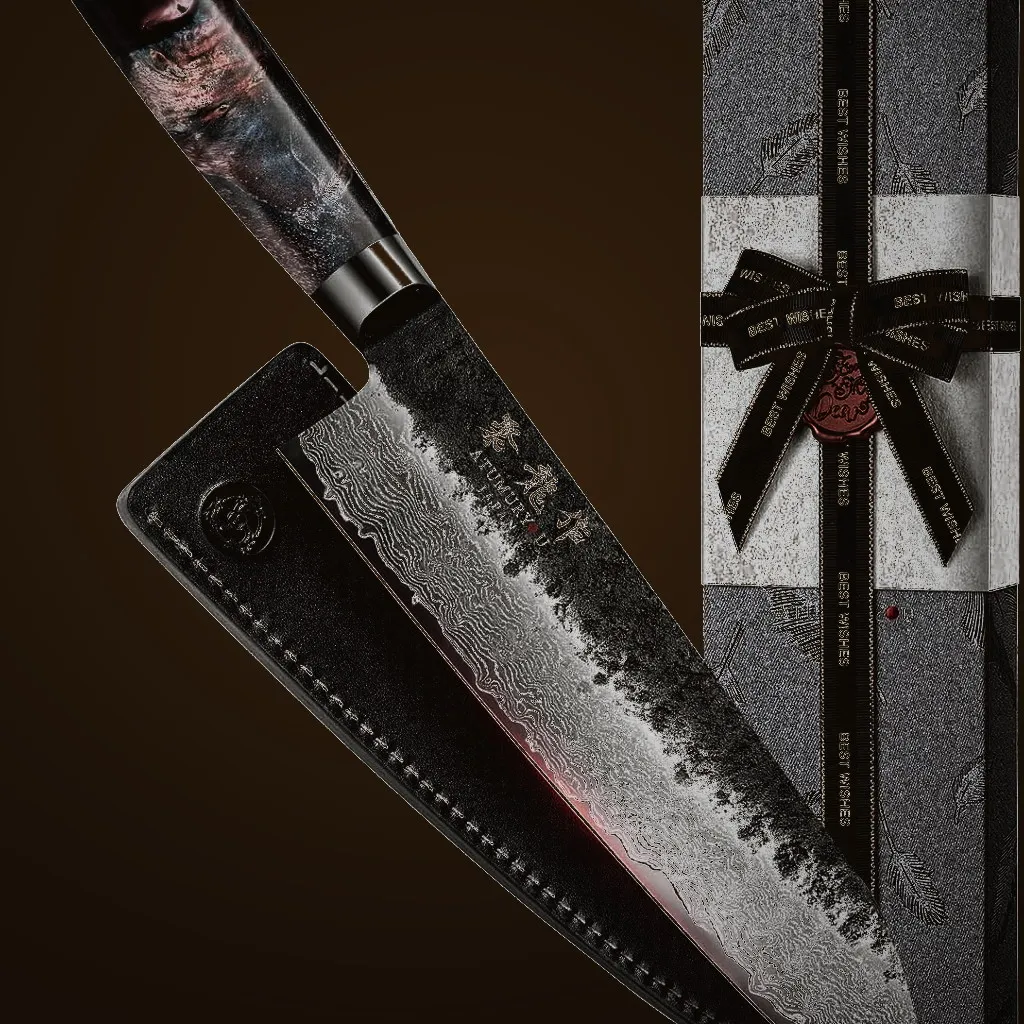
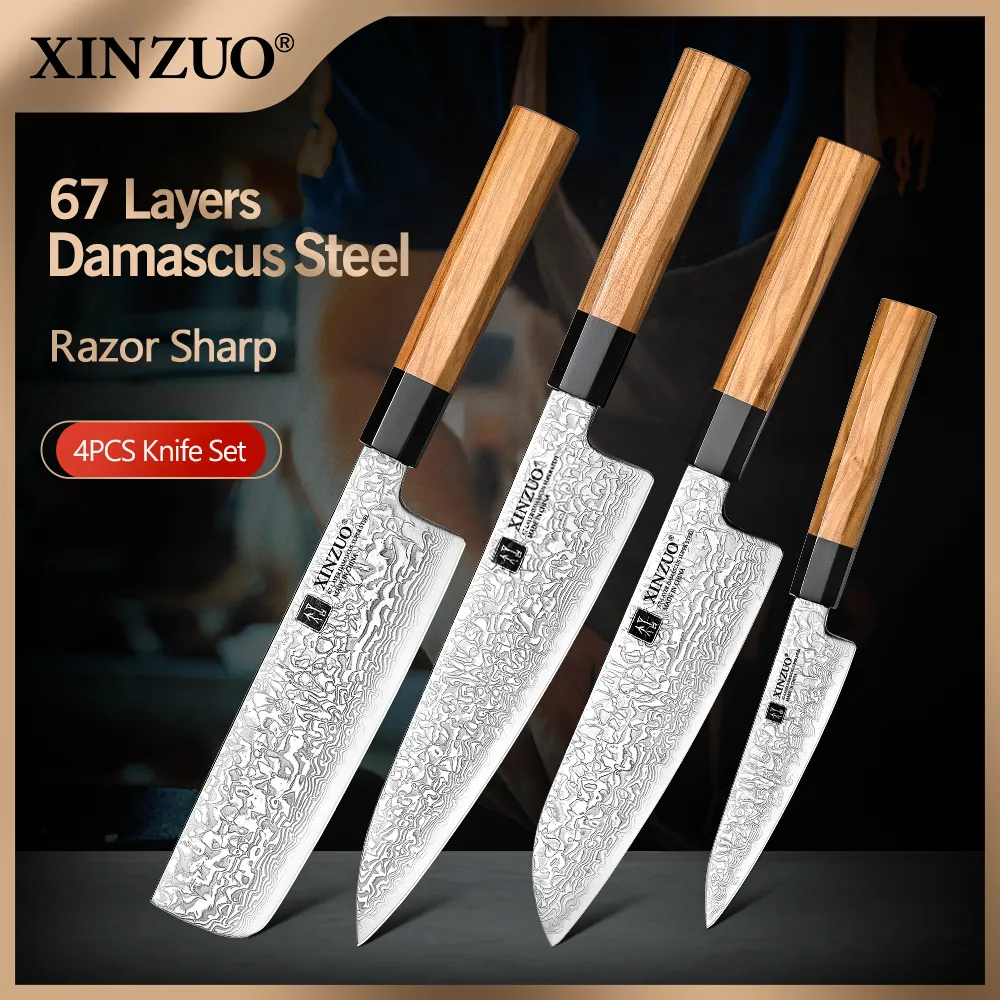
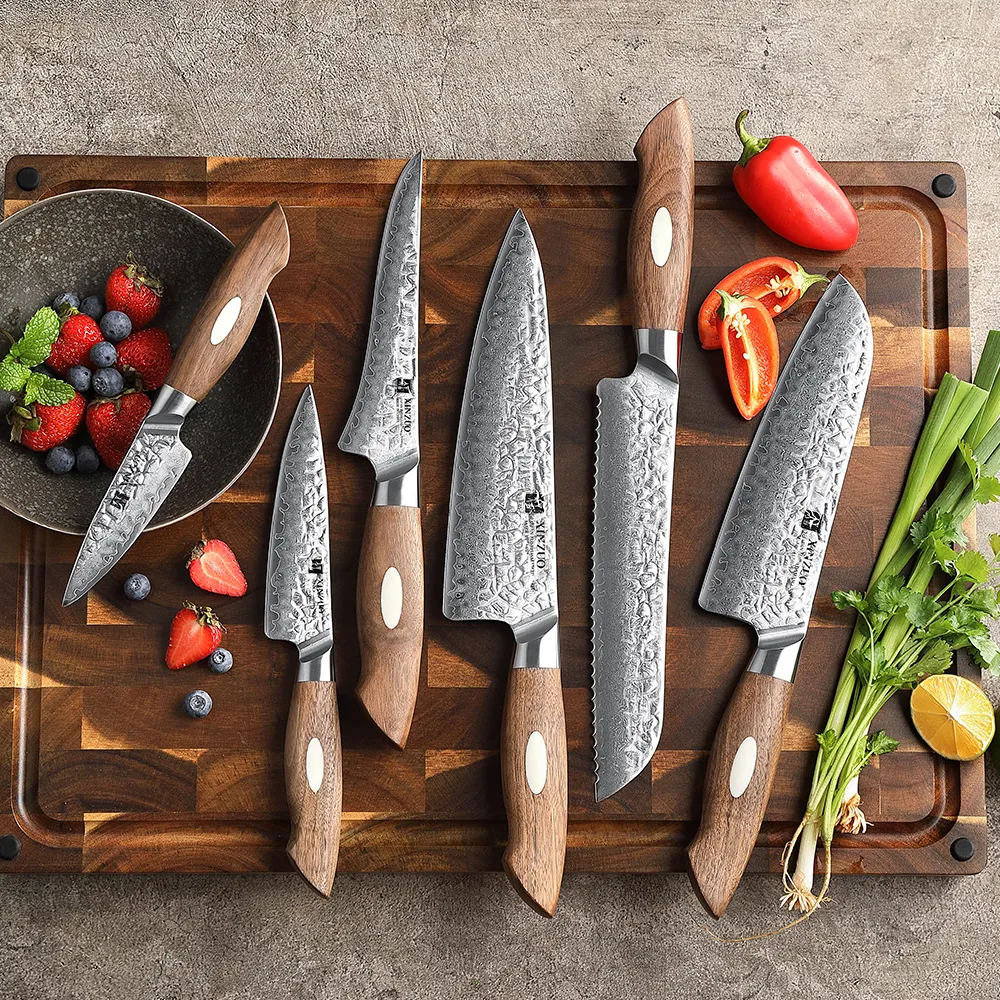
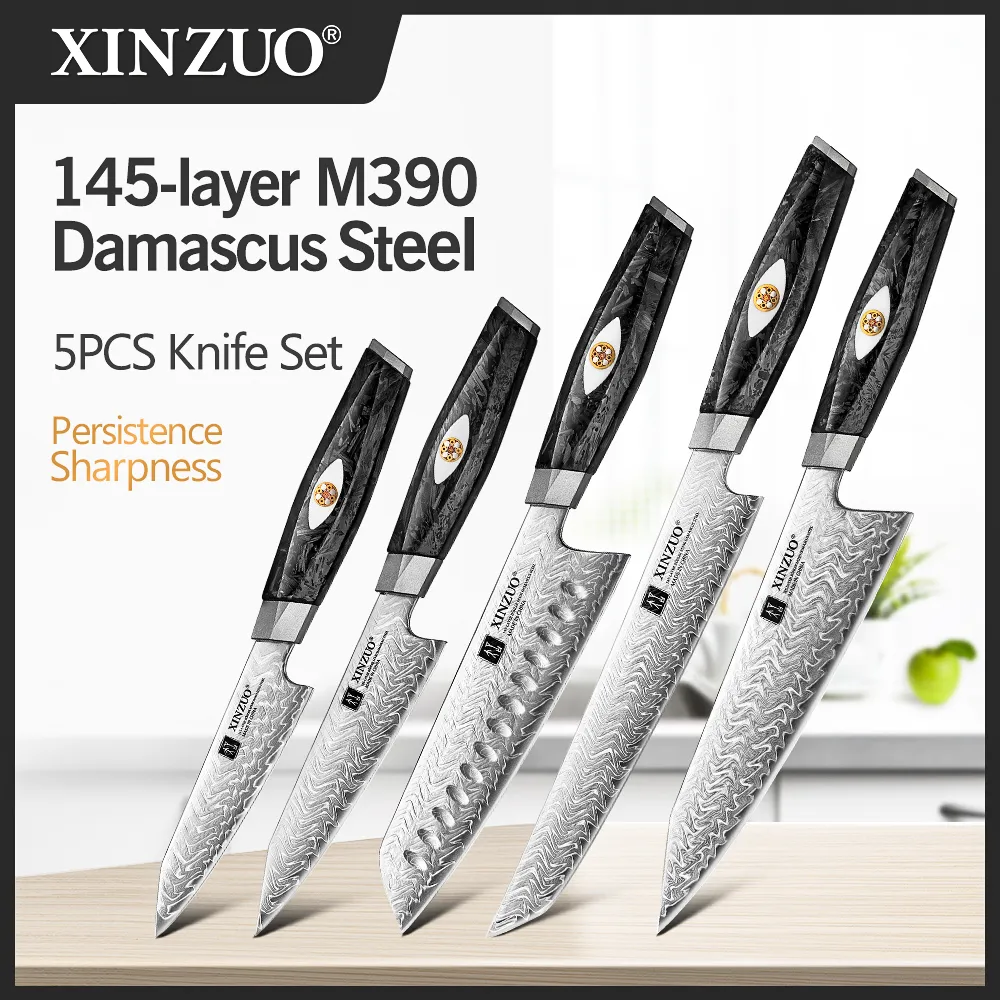
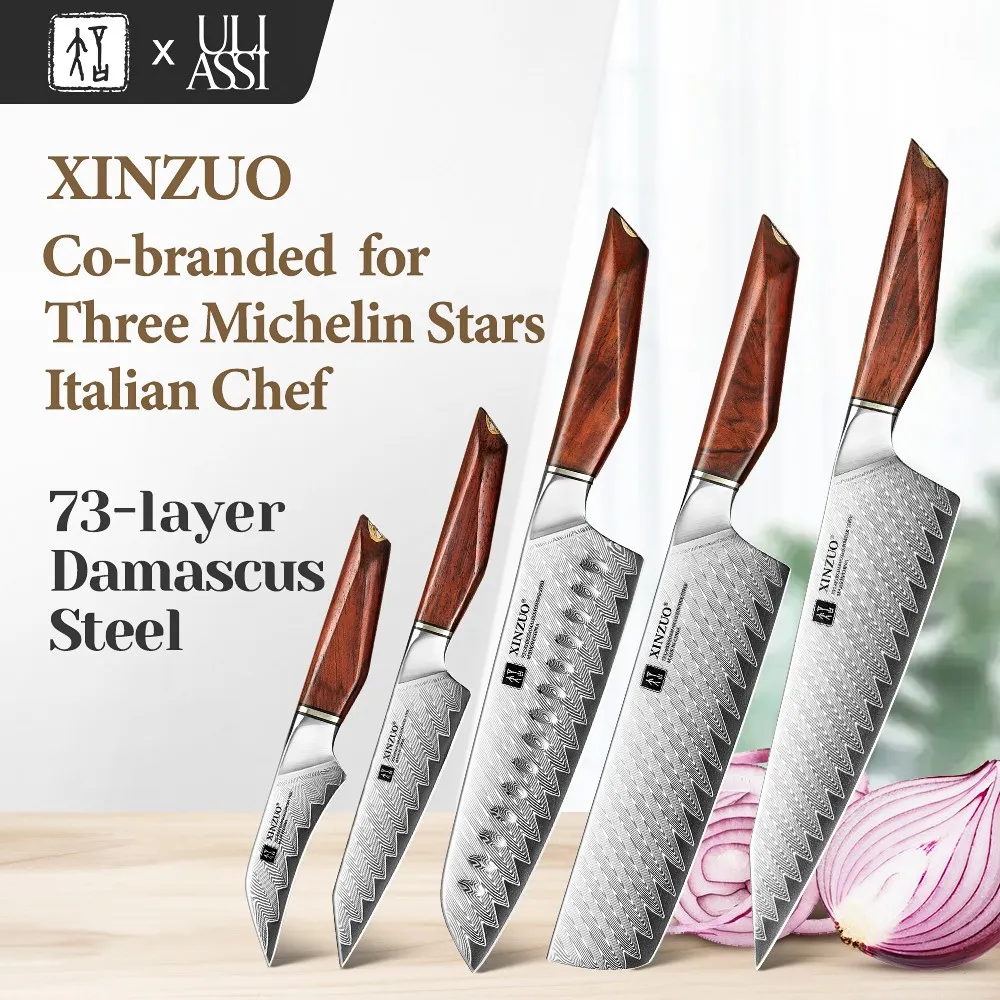
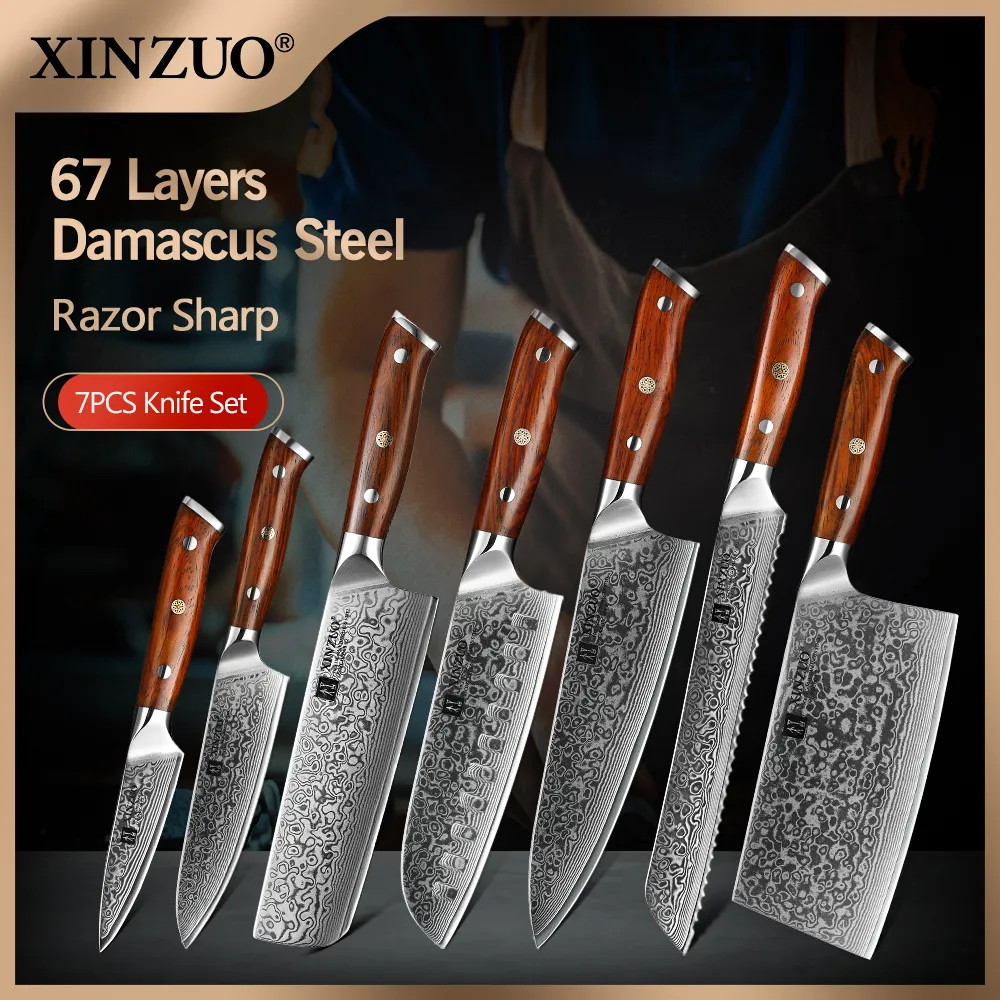
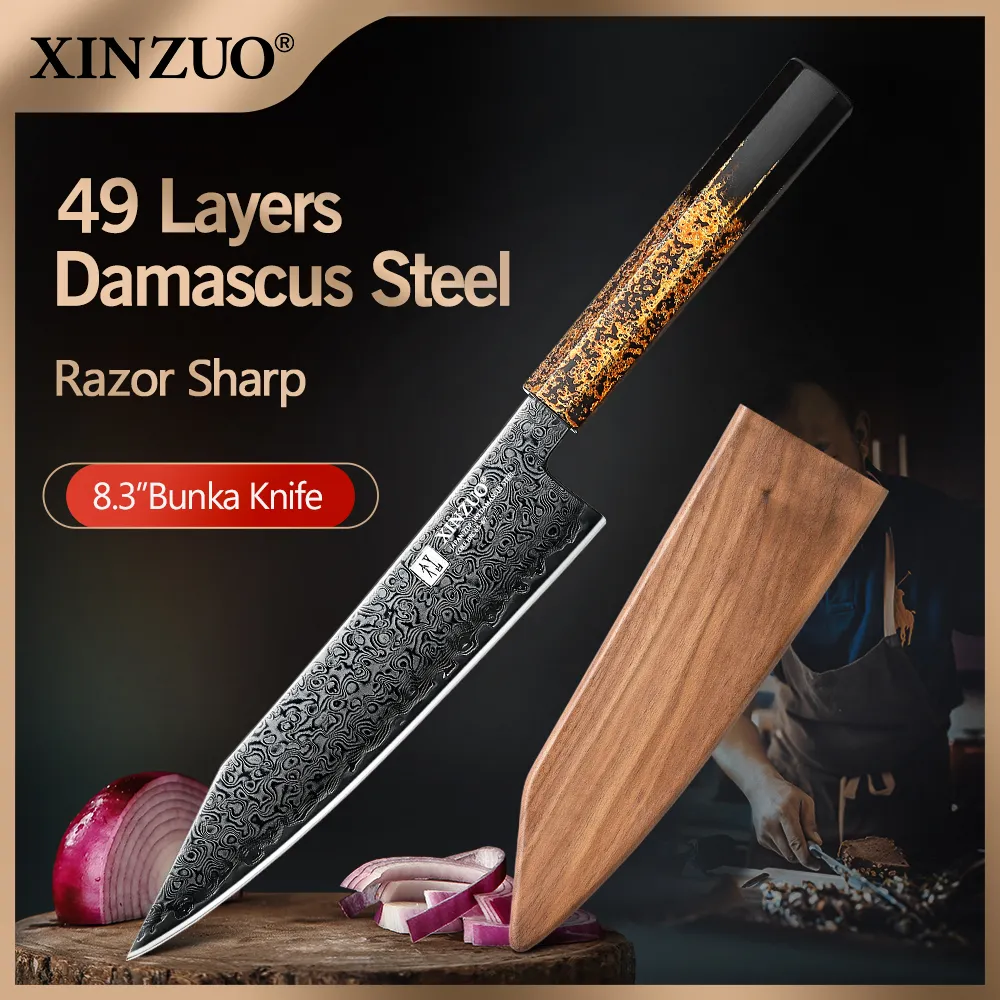
A named push-cut primary is the Mitsumoto Sakari VG-10 Damascus santoku — 8.5 inches of VG-10 under real cladding. The rocking Western length is the Hezhen 8.3-inch VG-10 chef. The 8-inch kiritsuke is the angular hybrid; the Xinzuo 5.8-inch bunka is the shorter k-tip. A first named chef under a hundred CAD is the Samcook 8-inch VG-10 gyuto. A small matching family is the Xinzuo 3-piece Damascus set. A forged block that still names the job is the Hezhen 7-piece Damascus kitchen set. A VG-10 family in one shipment is the Sunnecko VG-10 Damascus set or the Senken Tsunami 7-piece. Powder-steel cladding at the top of the rail is the Xinzuo Michelin 5-piece. A pocket face that still names VG-10 is the VG-10 artisan folding knife.
Hand-wash every kitchen piece on this rail, dry it before it hits the block, and keep the dishwasher away from cladding. Hone VG-10 weekly on a ceramic rod; stone it when the hone stops raising a burr. Oil carbon-leaning cores after a wet week. The care contract is the Damascus kitchen-knife care dossier; the hardware is the sharpening-tools hub. Add a stone to a chef and the order often clears free tracked shipping at $150 CAD.
Named core · VG-10 cladding · Sets and singles · Priced in CAD
Featured on this shelf
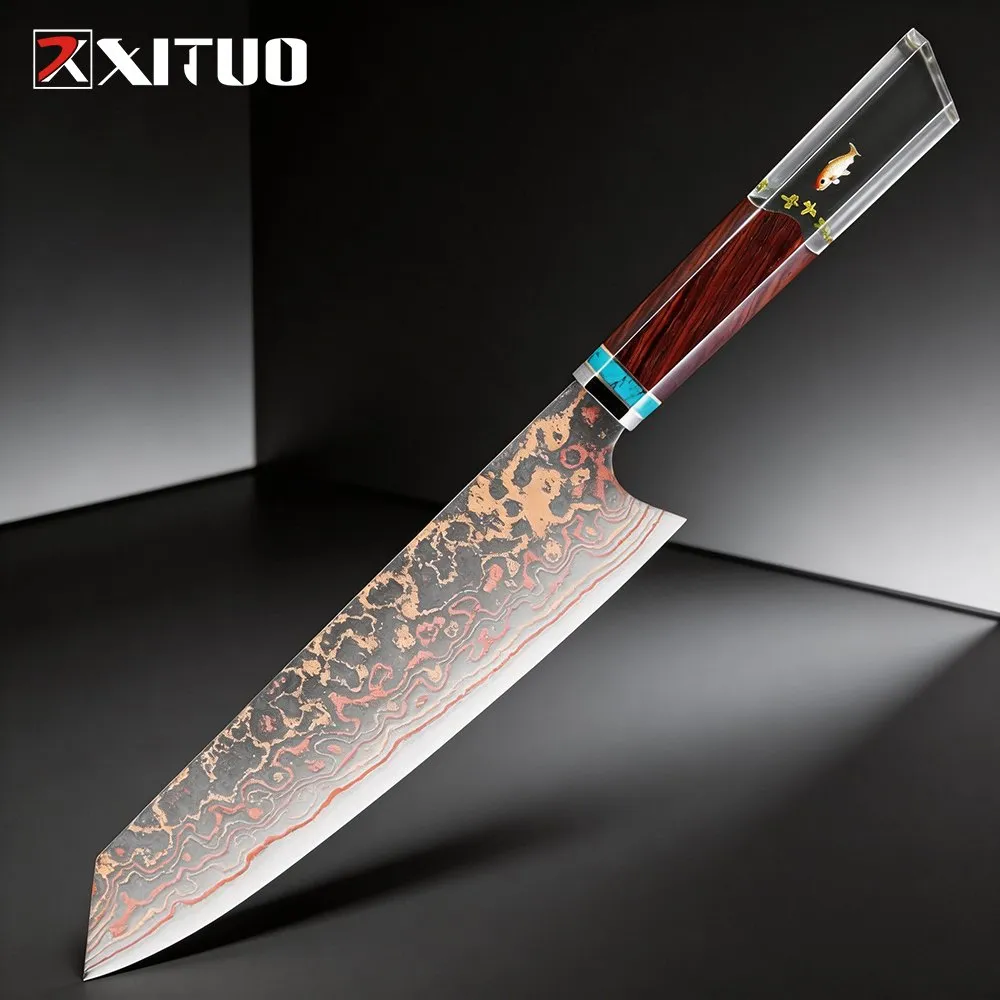
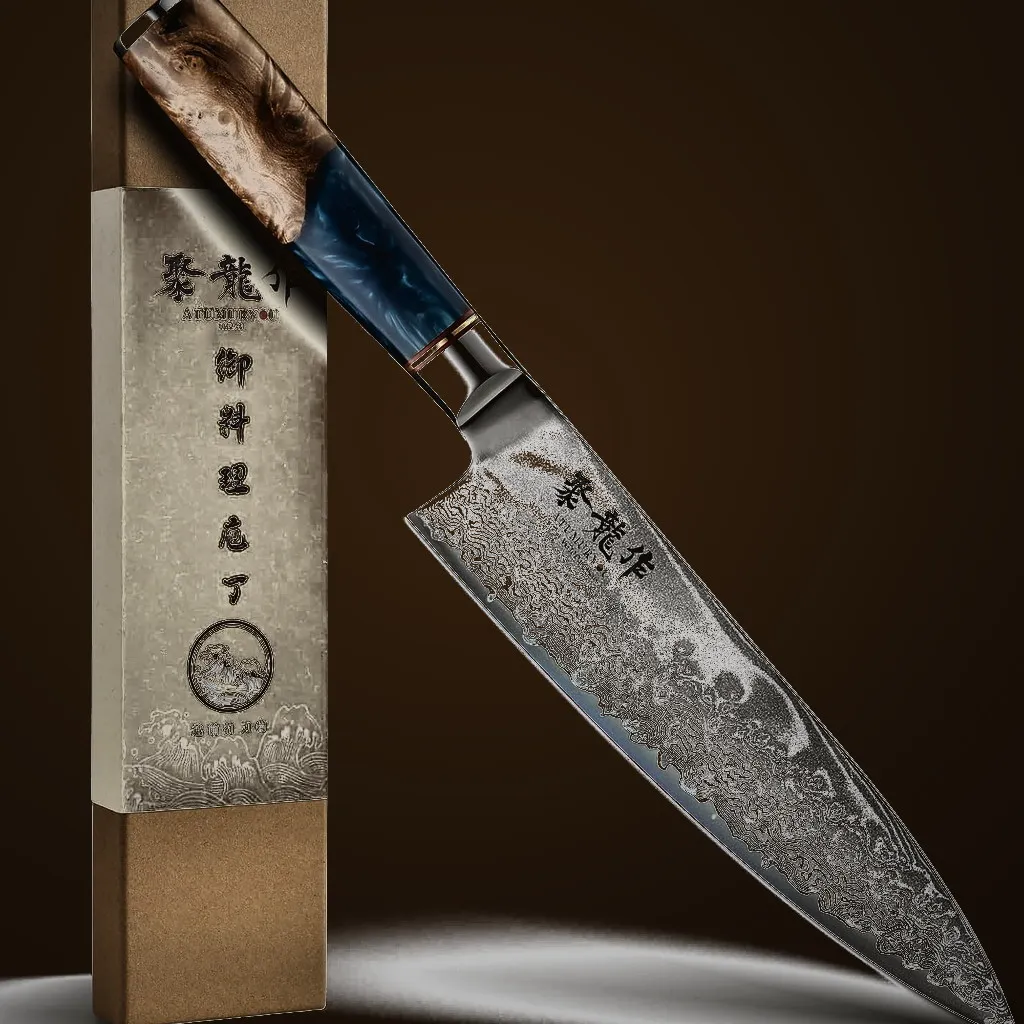
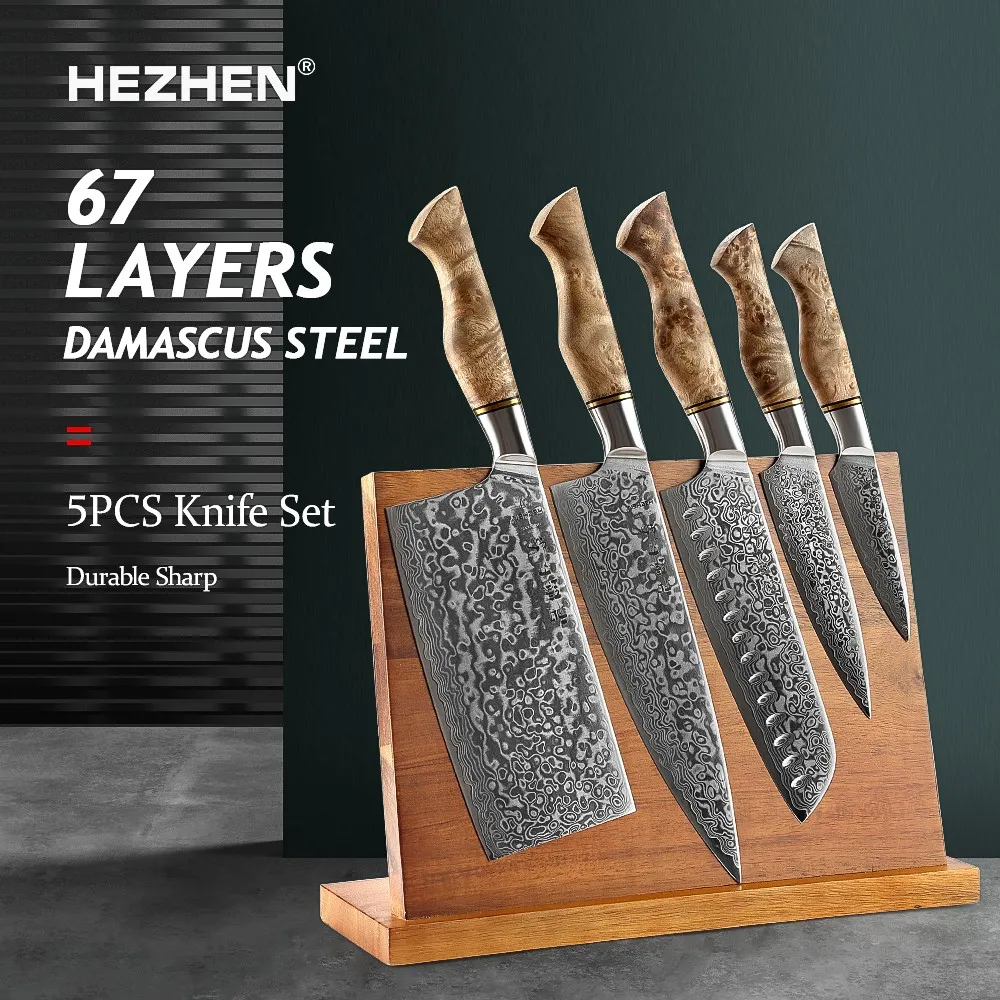
Start here if you want a short list: featured pieces from this collection, priced in CAD.
Canadian storefront · Est. 2015
Priced in CAD
Canadian dollars on the tag. GST/HST calculated at checkout from your address.
Tracked delivery
Tracked shipping at 10% of merchandise, typically 2 to 4 weeks.
Discreet packaging
Plain packaging. No knife graphics on the outside of the box.
Free shipping over $150
Tracked shipping is free when the order is $150 CAD or more.
Adults 18+
Responsible ownership. You confirm lawful purchase at checkout. Unlawful orders are cancelled and refunded.
How to buy from this shelf
- Name the core before you name the pattern. VG-10, 10Cr15CoMoV, AUS-10, 440C, ZDP-189, or powder steel. Layer count without a core is decoration — the Damascus steel dossier is the longer version of that sentence.
- Choose geometry second. Eight-inch chef or gyuto if you rock; santoku if you push-cut; kiritsuke or bunka if you already want a k-tip. The chef-knives hub is that job with or without cladding.
- Buy one primary before a block. A Samcook VG-10 gyuto or the Mitsumoto Sakari VG-10 santoku covers weeknights. Add a matching set only if you will use every shape.
- Matched cores beat mixed junk. The Xinzuo 3-piece, Sunnecko VG-10 set, and Hezhen 7-piece are families; a $24 mystery “Damascus set” is a photograph.
- Hand-wash, hone, stone. Never the dishwasher. Keep a 1000-grit stone on the sharpening hub. Powder and ZDP-189 want diamond.
- CAD on the tag, GST/HST at checkout, tracked shipping free over $150 CAD on knives and small goods. A chef plus a stone, or almost any set on this rail, usually clears it. Adults 18+.
01 Core versus cladding — what Damascus means on this shelf
Modern kitchen Damascus is almost never crucible wootz. It is pattern-welded cladding: two or more alloys stacked, drawn, and acid-etched so the layers show as waves, rain, or a ladder. The cladding is the photograph. The core is a separate, harder steel forged or laminated down the centre so the edge can be thin and keen without asking the pretty layers to do the cutting. On this rail that core is usually VG-10 around 60 HRC. Sometimes it is 10Cr15CoMoV, AUS-10, 440C, 3Cr14, ZDP-189, or a powder steel. The product page is supposed to say which.
Layer count is a construction fact about the cladding, not a score. A 67-layer face and a 73-layer face over the same VG-10 core cut the same onion. A 37-layer tricolor copper clad kiritsuke is a different look, not a harder knife. Workshops print “67 layers” because shoppers search it. We leave the number on the listing when the supplier states it, and we will not pretend it is hardness, toughness, or a reason to skip the core name. The Damascus steel dossier is the metallurgy; this page is how that construction shows up in CAD on a Canadian kitchen order.
How to read a piece here: name the core, then the geometry, then the handle, then the layer count as decoration. If the title leads with layers and never names a steel, look at the specs. Some older titles still say only “Damascus” because the supplier did not give a core — we do not invent VG-10 to dress them. A through-thickness etch you can see at the spine is honest cladding. A surface-only acid print on mystery stainless is a souvenir. We would rather a Samcook that names VG-10 at about CAD $97 than a louder $24 “Damascus chef” with no core and no heat-treat number.
02 VG-10 and the other named cores on this rail
VG-10 is the daily Canadian kitchen default on patterned blades: a cobalt stainless that takes a fine edge, hones on a ceramic rod, and forgives a wet board better than carbon. Around 60 HRC it is hard enough for weeknight onions and tomatoes without asking you to become a sharpener before dinner. That is why the Mitsumoto Sakari VG-10 santoku, the Hezhen 8.3-inch VG-10 chef, the Samcook 8-inch VG-10 gyuto, the 8-inch VG-10 chef, and the 7-inch VG-10 santoku all lead with that core instead of a layer slogan.
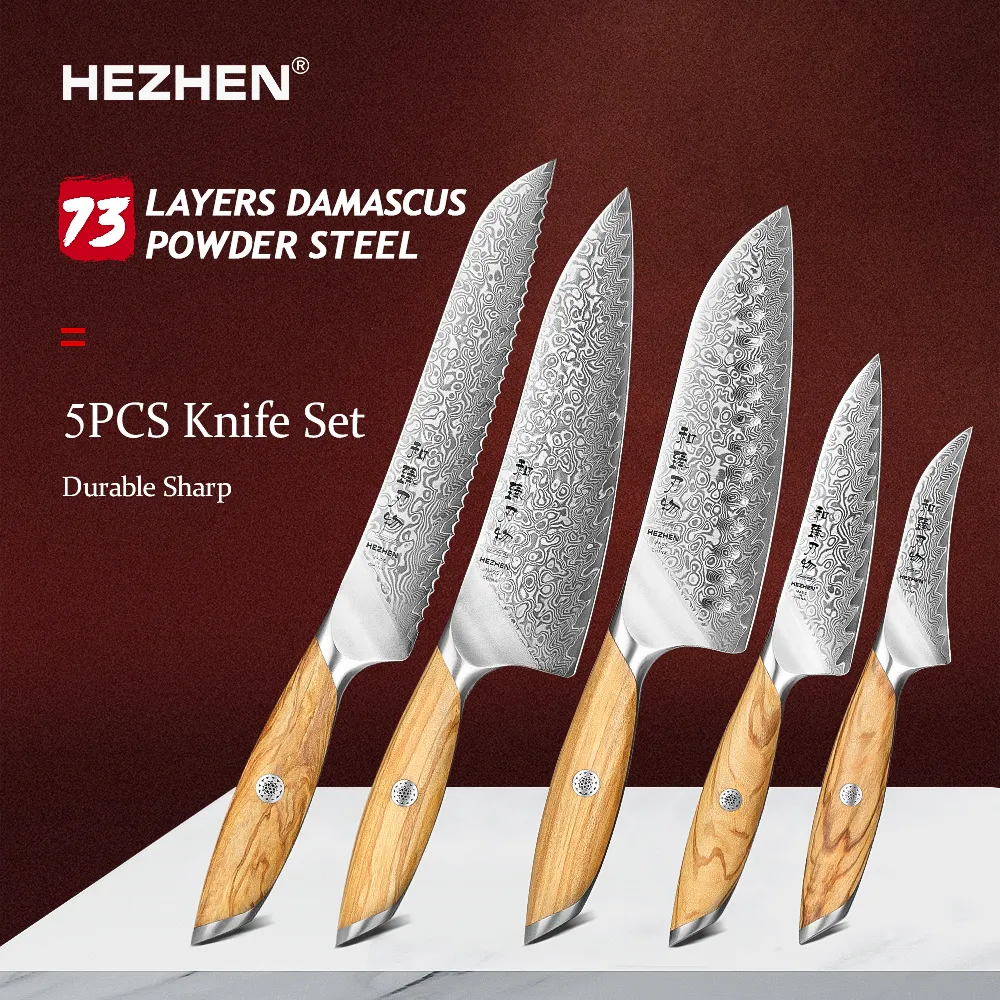
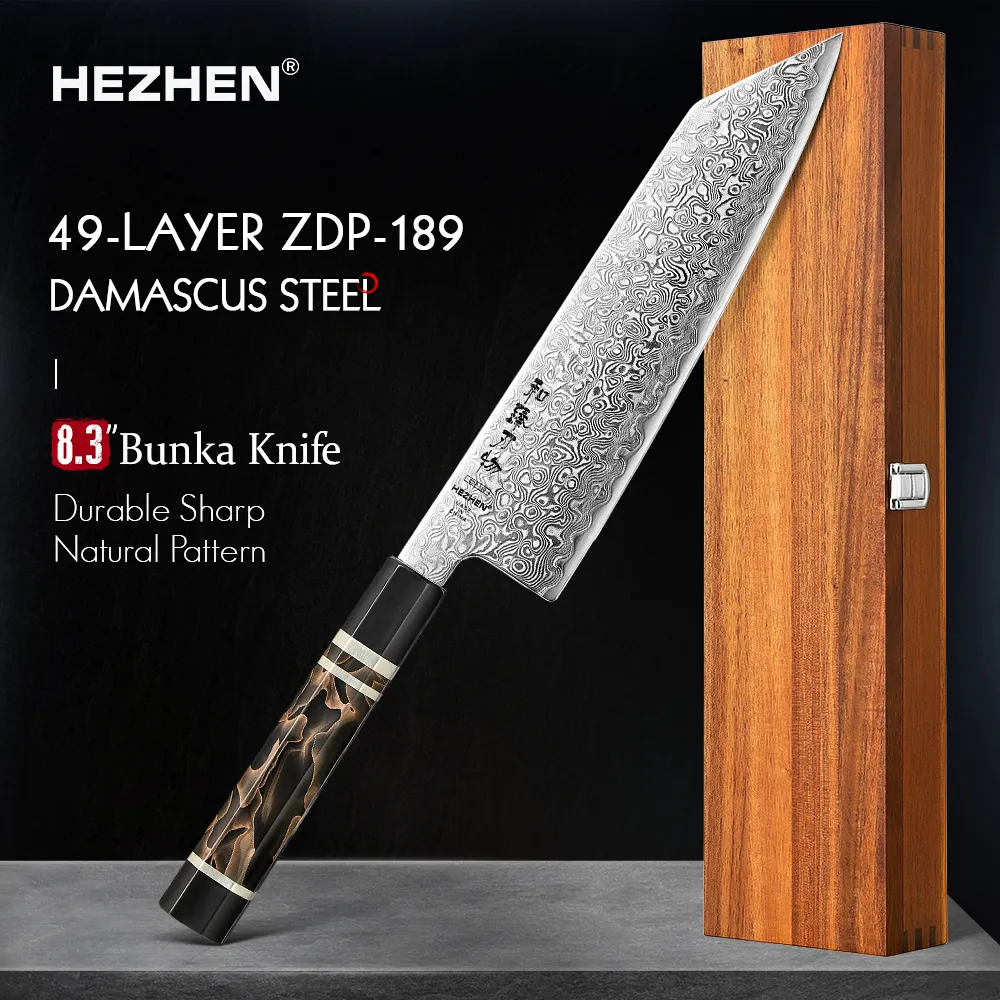
Not every patterned knife here is VG-10, and that is useful. The Hezhen 6-piece names 10Cr15CoMoV — a cobalt kitchen stainless in the same family, 60–62 HRC as the workshop states. Mitsumoto Sakari 440C chefs are a tougher, slightly softer stainless under the same cladding idea. The Hezhen 7-piece forged set is 3Cr14 under Damascus cladding: a working block steel, not a VG-10 clone, honest if you want chef-through-bread in one shipment without pretending it is powder. Xinzuo AUS-10 and 10Cr15 sets sit at the high end of the family drawer. ZDP-189 pieces — the Hezhen ZDP-189 kiritsuke — hold a finer edge longer and chip if you twist into bone. The Xinzuo Michelin 5-piece is powder-steel core under cladding: months between stones, diamond plates when it finally dulls, not a first knife for a dishwasher household.
Pick VG-10 if you cook most nights and will hone. Pick powder or ZDP-189 if you will baby the edge and own a diamond stone from the sharpening-tools hub. Pick 440C or 3Cr14 if you want a patterned set that survives a less careful drawer. Do not pick a core by Instagram contrast. The kitchen steel guide is the number-by-number comparison; this shelf is where those names actually sit in CAD.
03 One Damascus chef versus a matched set
A patterned kitchen starts with one primary blade, not a photograph of a full block. If you rock through an onion, buy an eight-inch chef or gyuto. If you push-cut vegetables on a smaller board, buy a santoku. A kiritsuke or bunka is the same job with a k-tip — useful when you already like a reverse-tanto point, not a first knife because the silhouette looks Japanese. Geometry is the chef-knives hub; construction is this one. The how to choose a chef knife and chef vs santoku dossiers are the motion test.
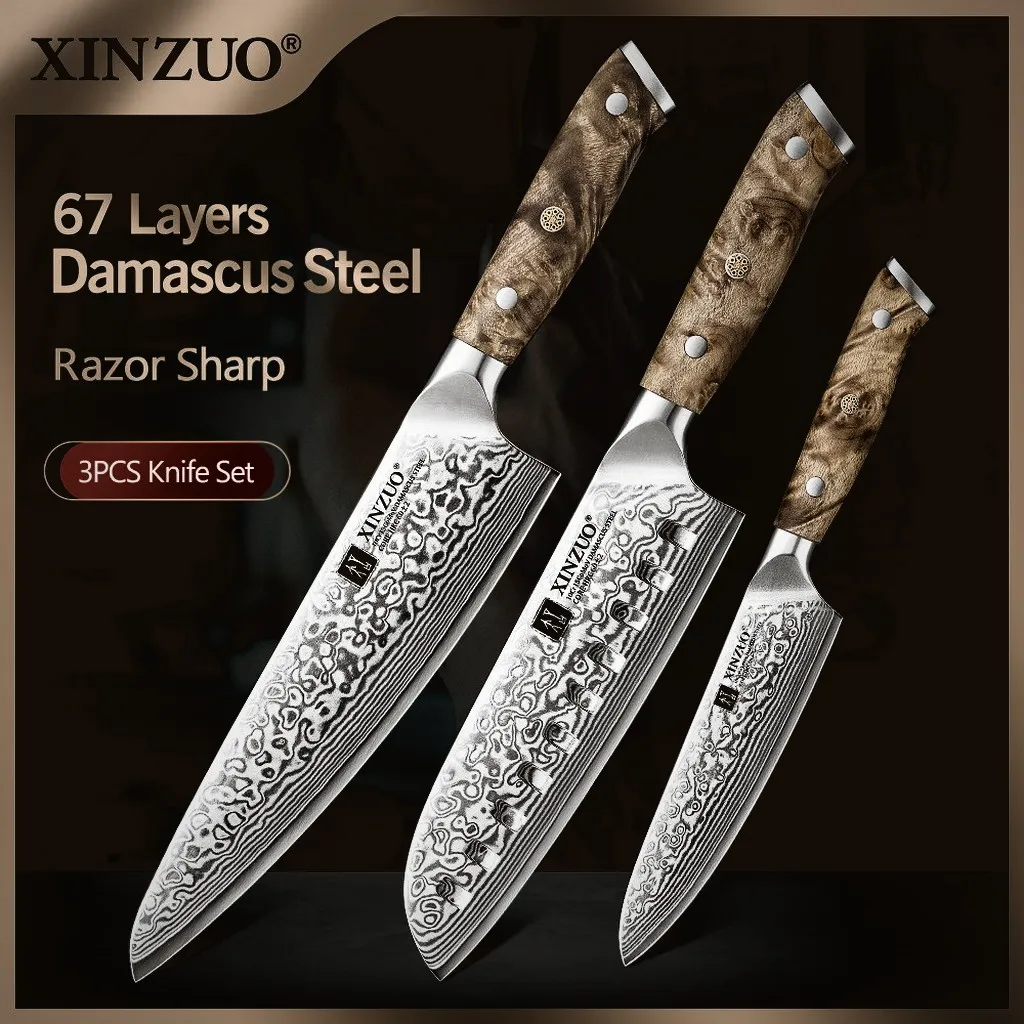
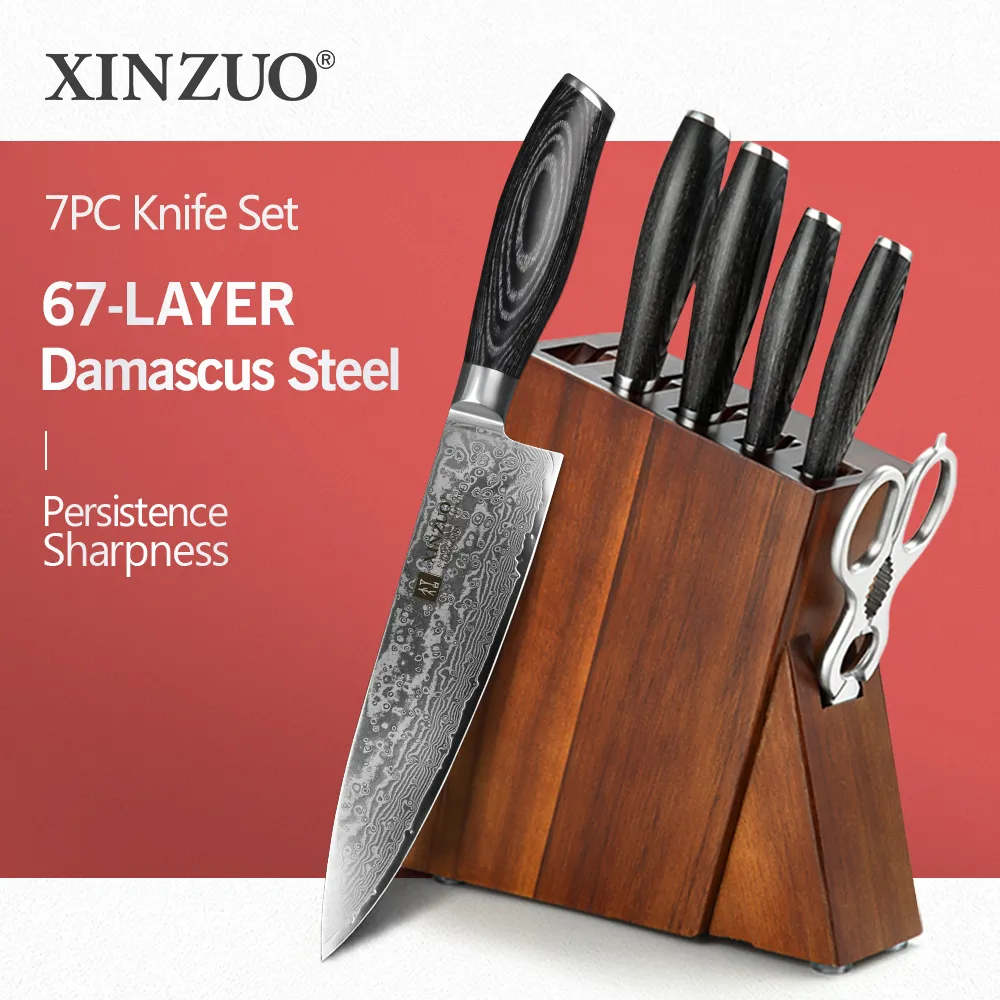
A small set earns its slot when every piece shares a named core and you will actually use the second and third shapes. The Xinzuo 3-piece is chef, santoku, and utility in the mid-seventies CAD — a matching family rather than a lonely gyuto plus junk-drawer paring. The Sunnecko VG-10 set and the Senken Tsunami 7-piece are the same idea scaled up: one steel, several jobs, one shipment that usually clears free tracked shipping on its own. The Hezhen 7-piece is the forged-block version if you want chef, santoku, bread, and a walnut rest in one box and you accept a 3Cr14 core instead of VG-10.
Skip the padded mystery set. A listing that inflates the piece count with steak knives you did not choose, shears you will not sharpen, and a steel that is not named is a photograph, not a kitchen. Table knives belong on kitchen, not as filler inside a Damascus headline. If you only want the primary, buy the santoku or the Samcook and add a petty later. If you already cook every night and hate mixed steels on the stone, buy the matched VG-10 family. The how many kitchen knives dossier is the arithmetic; this grid is the patterned stock that arithmetic points at.
04 Buying Damascus kitchen knives in Canada, in CAD
Canadian shoppers lose money on US Damascus listings twice: once at the exchange rate, and again if brokerage or a surprise duty hits a knife that was never priced for a Canadian door. This storefront prices in CAD. GST/HST is calculated at checkout from your province — not a “plus tax at the border” surprise on a USD cart. You are buying from a Canadian shop that has sold kitchen and pocket steel since 2015, not from a marketplace seller who discovered “Damascus chef” last week.
Tracked shipping on knives and small goods is 10% of that merchandise subtotal, and it is free when those items total $150 CAD or more. Typical delivery to Canada and the US is two to four weeks in plain packaging. A named chef plus a whetstone often crosses $150. A 3-piece or a 7-piece set usually clears it alone. Workshop machines on other shelves are a different freight rule; nothing on this Damascus rail is a belt grinder. Adults 18+. You confirm lawful ownership at checkout; unlawful orders are cancelled and refunded.
Spend in bands, not in layer counts. Under CAD $100, a named-core 8-inch such as the Samcook VG-10 gyuto is the honest first patterned chef. Mid $100s to low $300s is the daily VG-10 santoku, Hezhen chef, kiritsuke, and bunka band — the knives this hub is actually for. Matched sets from the high $400s through the $800s are one-shipment families (Sunnecko, Senken, Xinzuo VG-10, Hezhen forged). Powder and ZDP-189 sit above that because the core, not the etch, got more expensive. We do not invent star ratings to dress any of those bands. If a product page has no review count, it has no review count.
05 Care that keeps the pattern — and the edge
Kitchen Damascus fails in the dishwasher, not on the tomato. Detergent, heat, and a wet heap pit the core, dull the apex, and haze the etch that made you buy the knife. Hand-wash with a drop of soap, rinse, dry the blade and the handle junction, then put it on a magnetic strip or in a block — not loose against other steel in a drawer. That is the whole non-negotiable ritual. It is true of VG-10, 440C, 3Cr14, ZDP-189, and powder alike. The Damascus kitchen-knife care dossier is the longer version of this paragraph.
Hone VG-10 and similar kitchen stainless weekly on a ceramic rod if you cook most nights. The rod does not sharpen; it stands the burr back up. When the hone stops restoring bite, use a stone — about 1000 grit to repair, then a finer stone or a strop to finish. Powder steels and ZDP-189 want diamond or CBN for the hard work; a cheap water stone that worked on VG-10 will skate. Cut on wood or plastic, never glass, stone, or ceramic. Keep the tip off bone and frozen food. Carbon-leaning cores get a wipe of food-safe oil after a wet week so the cladding contrast does not turn into orange freckles.
A chef from this shelf plus a first stone is the order that usually makes tracked shipping free at $150 CAD and keeps the knife from becoming a wall piece in six months. Shop the sharpening-tools hub for the 1000-and-finisher pair; do not buy a pull-through gadget that promises you will never learn an angle. Folders on this rail still want a wipe after a pocket day, and they still want a lock you can inspect — see folding knives if the handle, not the etch, is the point.
Pieces this shelf is talking about
On this shelf
Santoku and Japanese primaries
A santoku is the flatter Japanese primary: push-cut through vegetables instead of rocking an eight-inch chef. On this rail that usually means a VG-10 core under Damascus cladding — the Mitsumoto Sakari 8.5-inch is the named example — not a different steel because the silhouette changed. If you already rock, stay on the chef and kiritsuke listings; if you chop with a straight push, start here.
- 7" VG-10 Santoku — $169.98 CAD
- Senken 7-piece VG-10 Tsunami Kitchen Knife Set — $854.99 CAD
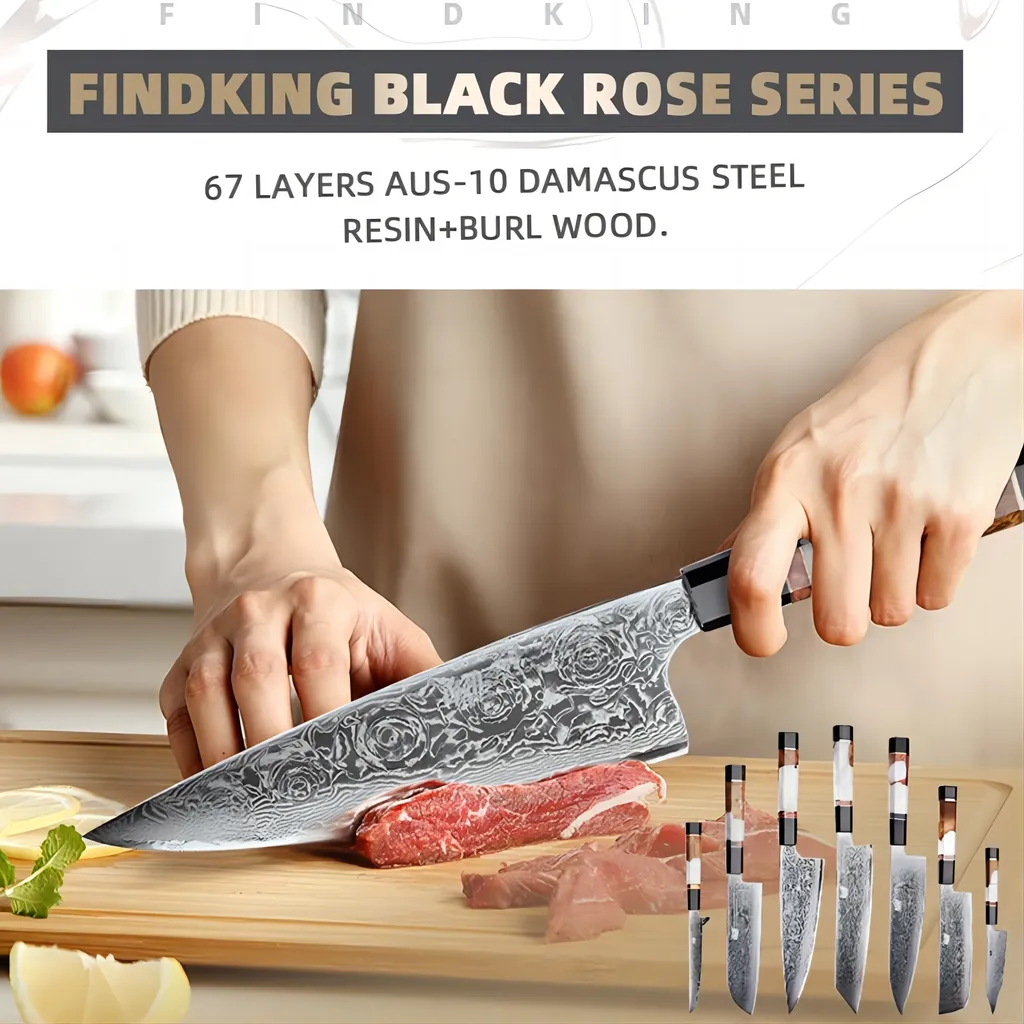
- Findking kitchen knife set — $780.57 CAD
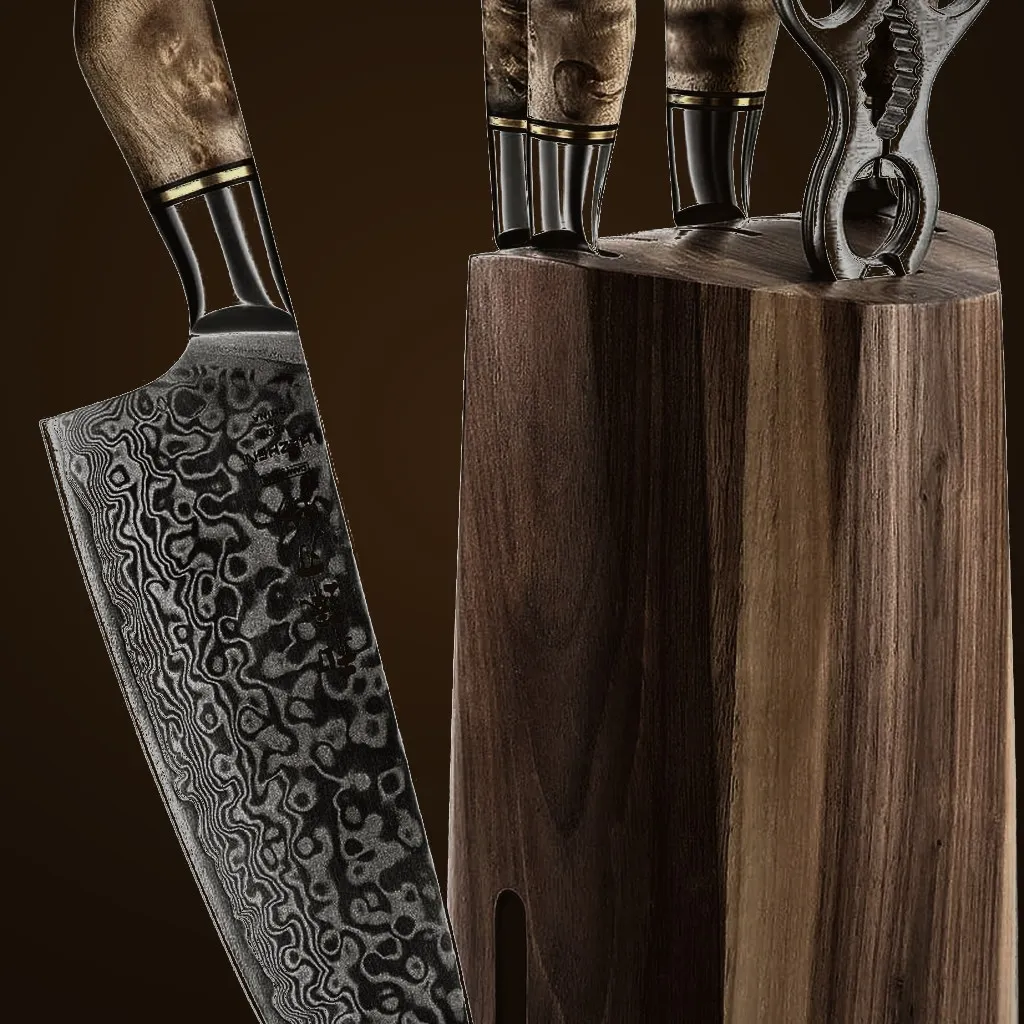
- Hezhen 7-piece 3Cr14 Knife Block Set — $689.99 CAD
- Kitchen Knife Set — $24.16 CAD
- Mitsumoto Sakari VG-10 Santoku — $307.19 CAD
- Xinzuo 10Cr15 kitchen knife set — $684.57 CAD
- Xinzuo 3-piece Kitchen Knife Set — $76.13 CAD
On this shelf
Damascus kitchen sets
A set is worth the CAD when chef, santoku, utility, and bread share one named core so they take the same stone. Xinzuo three-piece, Sunnecko VG-10, Senken Tsunami, and the Hezhen forged block are that family idea. Piece count without a core name is padding. Steak knives for the table still live on the kitchen hub — they are not a reason to inflate a Damascus headline.
- Hezhen 6-piece Damascus knife set — $711.53 CAD
- Senken 7-piece VG-10 Tsunami Kitchen Knife Set — $854.99 CAD
- Findking kitchen knife set — $780.57 CAD
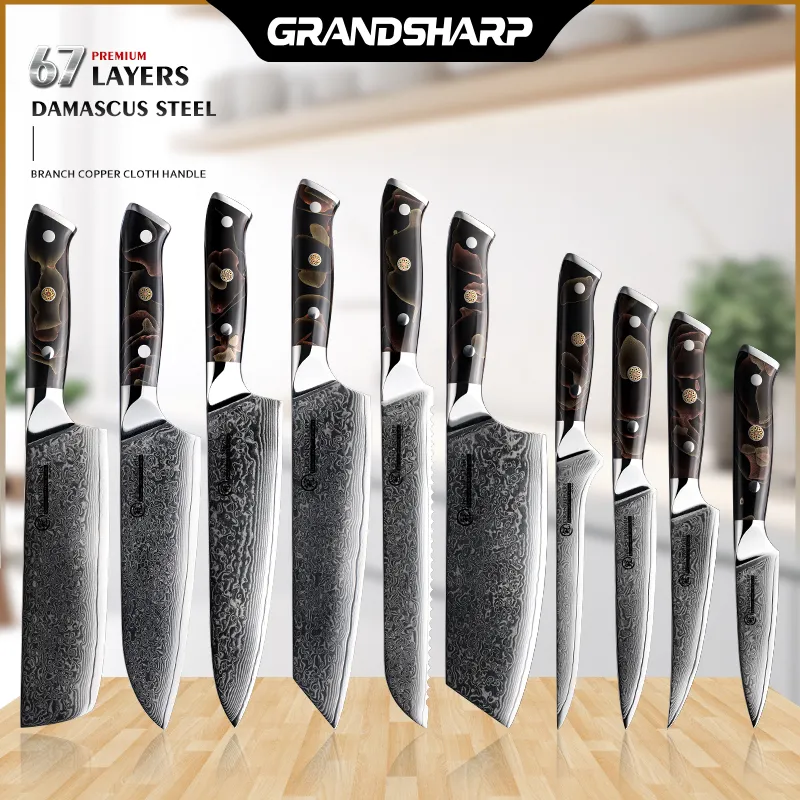
- Grandsharp 10Cr15 kitchen knife set — $684.77 CAD
- Hezhen 7-piece 3Cr14 Knife Block Set — $689.99 CAD
- Hezhen kitchen knife set — $917.07 CAD
- Kitchen Knife Set — $24.16 CAD
- Xinzuo 10Cr15 kitchen knife set — $684.57 CAD
- Xinzuo 3-piece Kitchen Knife Set — $76.13 CAD
- Xinzuo AUS-10 kitchen knife set — $982.49 CAD
- Xinzuo kitchen knife set · 192 — $920.07 CAD
- Xinzuo Michelin 5-piece set — $1,524.12 CAD
On this shelf
Damascus folding knives
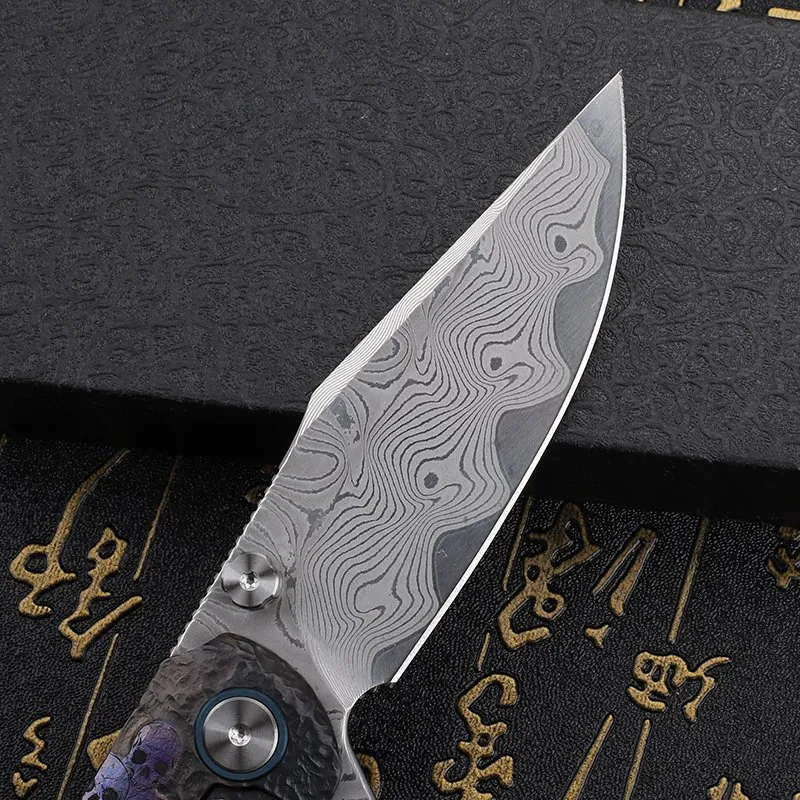
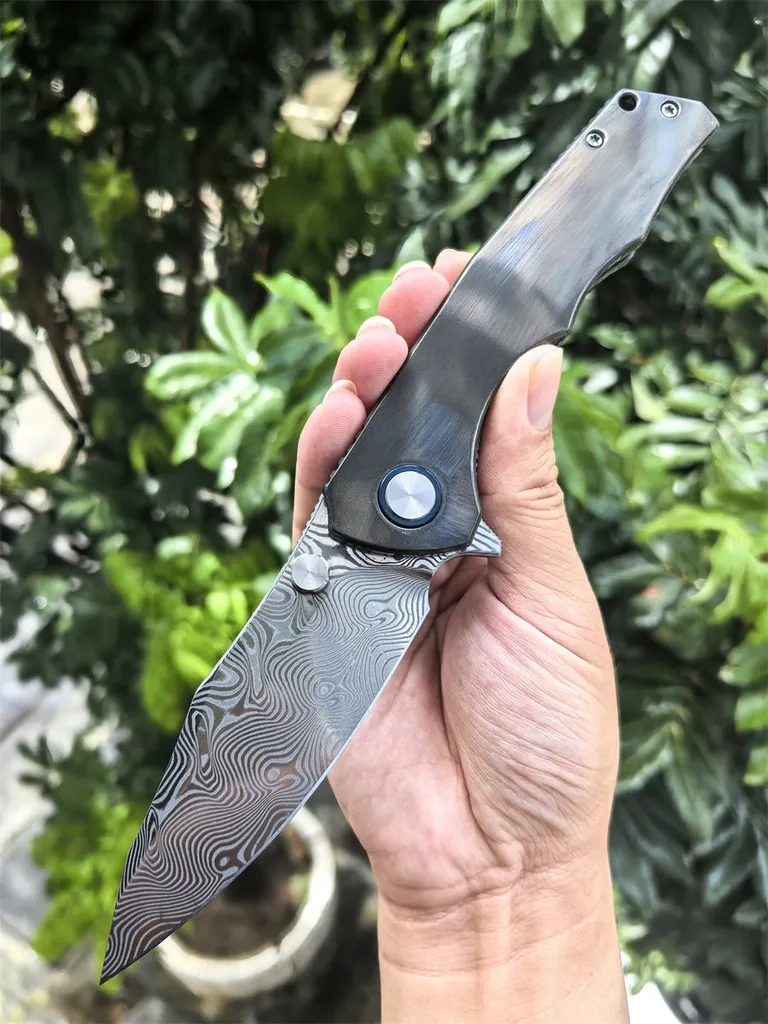
Pocket Damascus on this shelf is a patterned face over a named core — often VG-10 — with a lock you can inspect. It is not a chef knife that folds, and it is not a titanium powder-steel EDC. If the handle material is the point, use the titanium EDC rail. If you want a working G10 folder, use the parent folding-knives hub. Hand-wipe after a pocket day; the etch still hates a wet dump in a cupholder.
- VG-10 Folding Knife — $137.16 CAD
- Mini Cleaver — $125.00 CAD
- VG-10 Carved Folding Knife — $383.99 CAD
- Zirconium Folding Knife — $383.99 CAD
Damascus in the vault
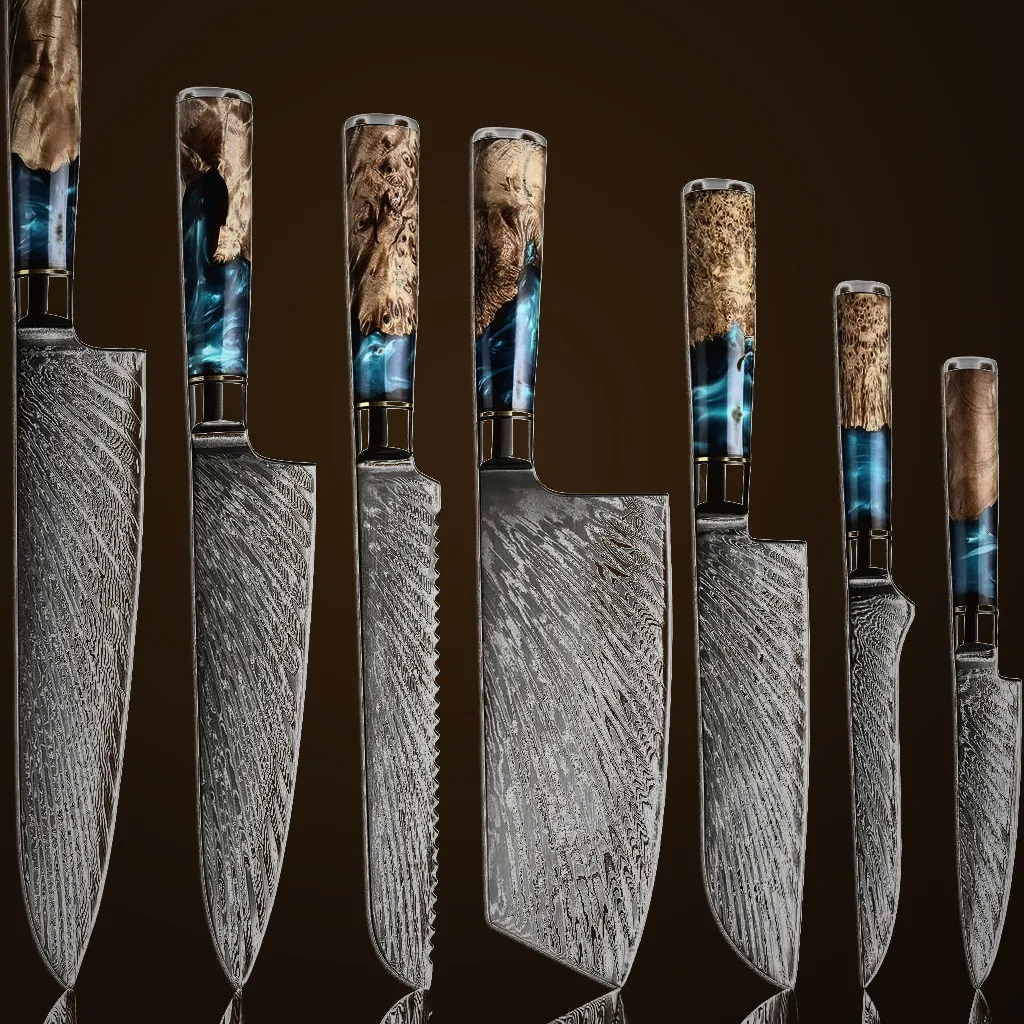
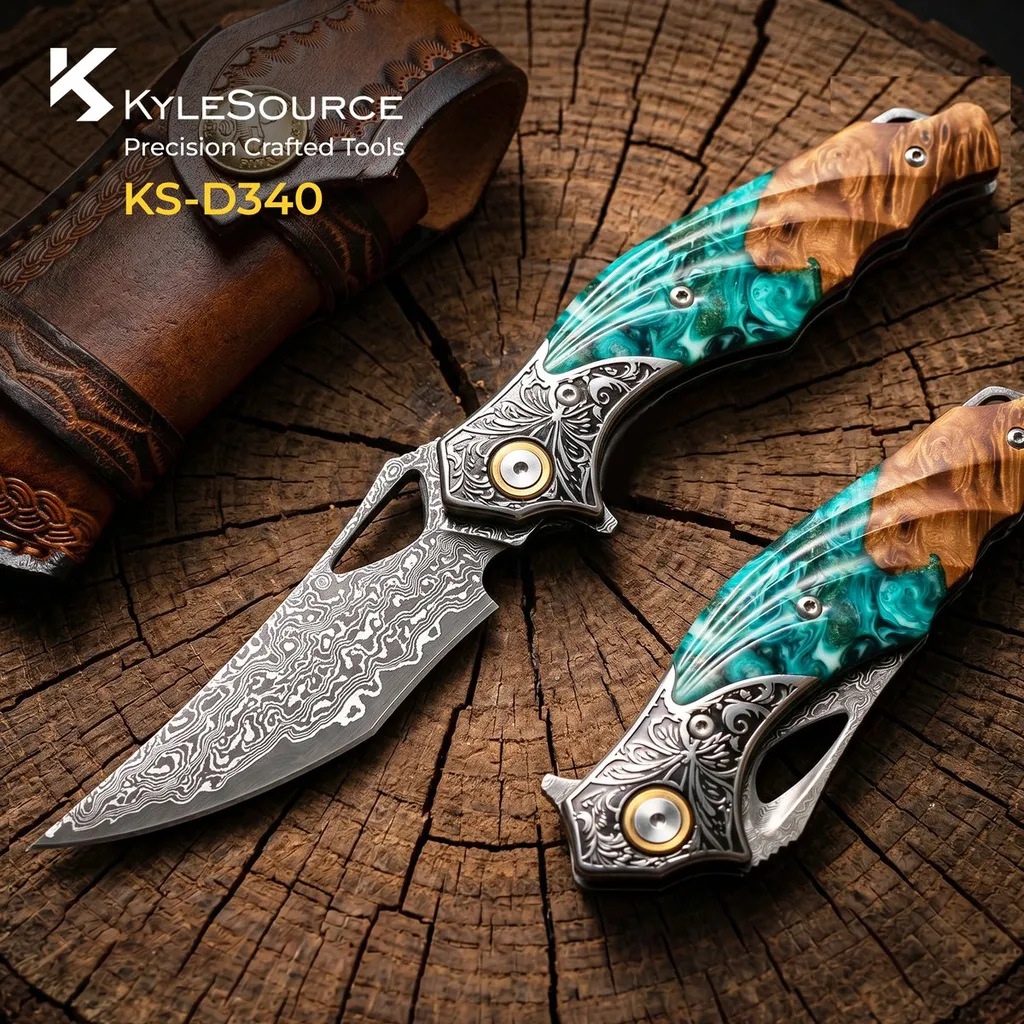
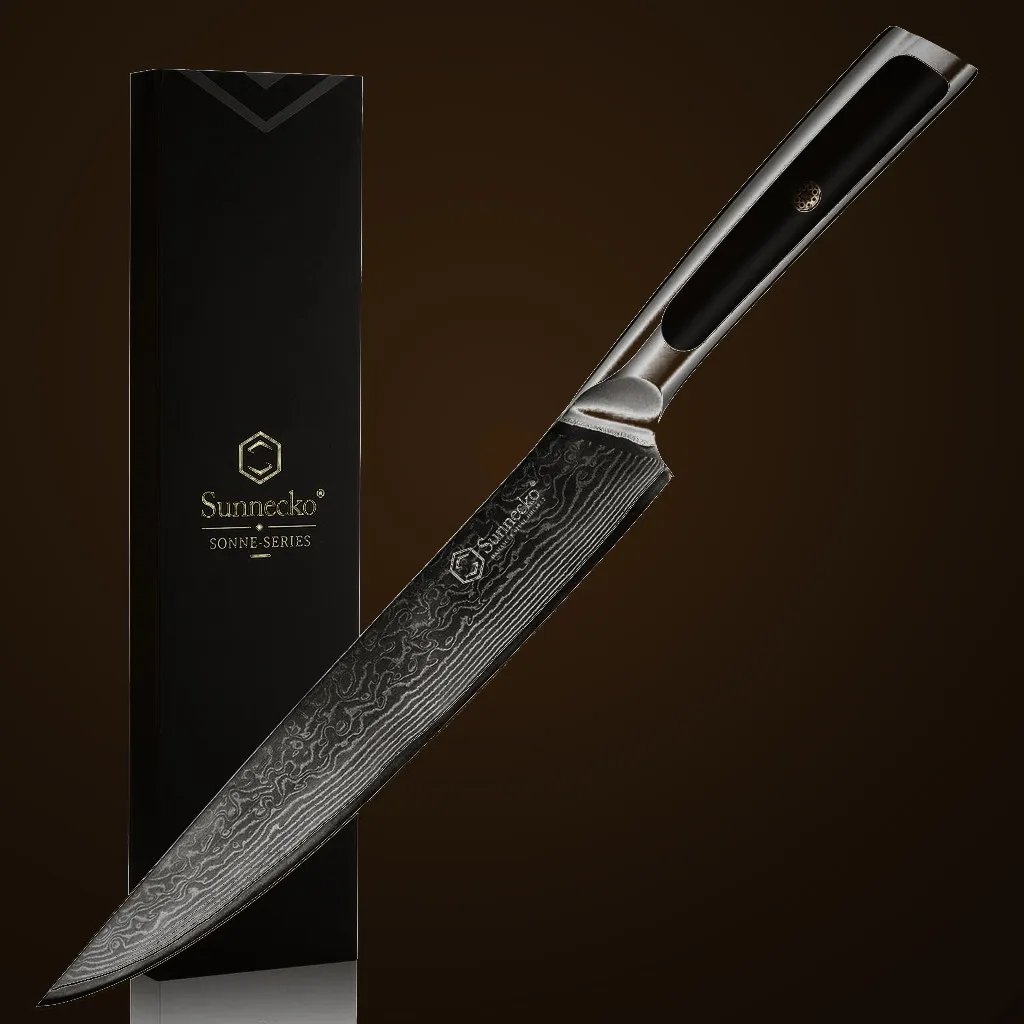
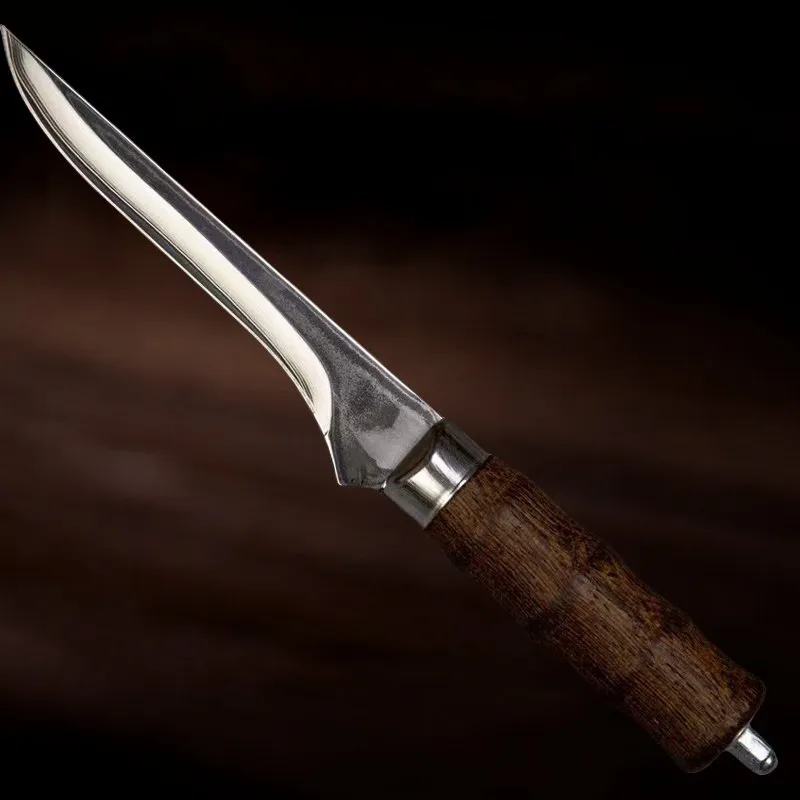
Frequently asked questions
Damascus knife questions Canadian shoppers actually ask
- What is Damascus steel on a kitchen knife?
- On this shelf it means pattern-welded cladding over a named core — the layers you see, the steel that cuts. It is not wootz and not a surface-only acid etch. Ask for VG-10, 10Cr15CoMoV, AUS-10, 440C, ZDP-189, or powder steel. Damascus steel explained is the metallurgy.
- What is the difference between the core and the Damascus cladding?
- Cladding is the patterned sandwich you see. The core is the harder steel at the edge that actually cuts. A 67-layer face over VG-10 cuts like VG-10. Layer count without a core name is decoration.
- Does more-layer Damascus cut better?
- No. Layer count is cosmetic on cladding. Edge life comes from the core steel, the heat treat, and the geometry. A 67-layer face and a 73-layer face over the same VG-10 core are the same knife with a different photograph.
- Is VG-10 a good core under Damascus cladding?
- Yes, for daily Canadian board work. VG-10 around 60 HRC takes a fine edge, hones on a ceramic rod, and is stainless enough for a wet onion board. Powder and ZDP-189 hold longer and want diamond. 440C and 3Cr14 are tougher, slightly less keen.
- Should I buy a Damascus chef knife or a Damascus set?
- Buy one primary first — 8-inch chef/gyuto or a santoku — in a named core. Add a matched set only if you will use the extra shapes and they share that core. A Xinzuo 3-piece is a set; a cheap padded block is not.
- How do I keep the Damascus pattern from fading?
- Hand-wash, dry immediately, store on a strip or in a block, never the dishwasher. Oil carbon-leaning cores after a wet week. The ritual is in the Damascus kitchen-knife care dossier.
- Do Damascus kitchen knives ship free in Canada?
- Tracked shipping on knives and small goods is free when that merchandise totals $150 CAD or more. A named chef plus a whetstone often crosses the line; most sets on this hub clear it alone. Under $150 you pay 10% tracked.
- What should I spend on a Damascus kitchen knife in CAD?
- A named-core 8-inch chef around CAD $90–$220 is the honest upgrade from a mystery block. Matched VG-10 sets sit higher because you are buying several blades that share a stone. We do not invent star ratings to move you between those bands.